State authority is where enforcement lives. It has been deliberately weakened.
You cannot strip these authorities during one outbreak and expect them for the next.
Putting things in perspective
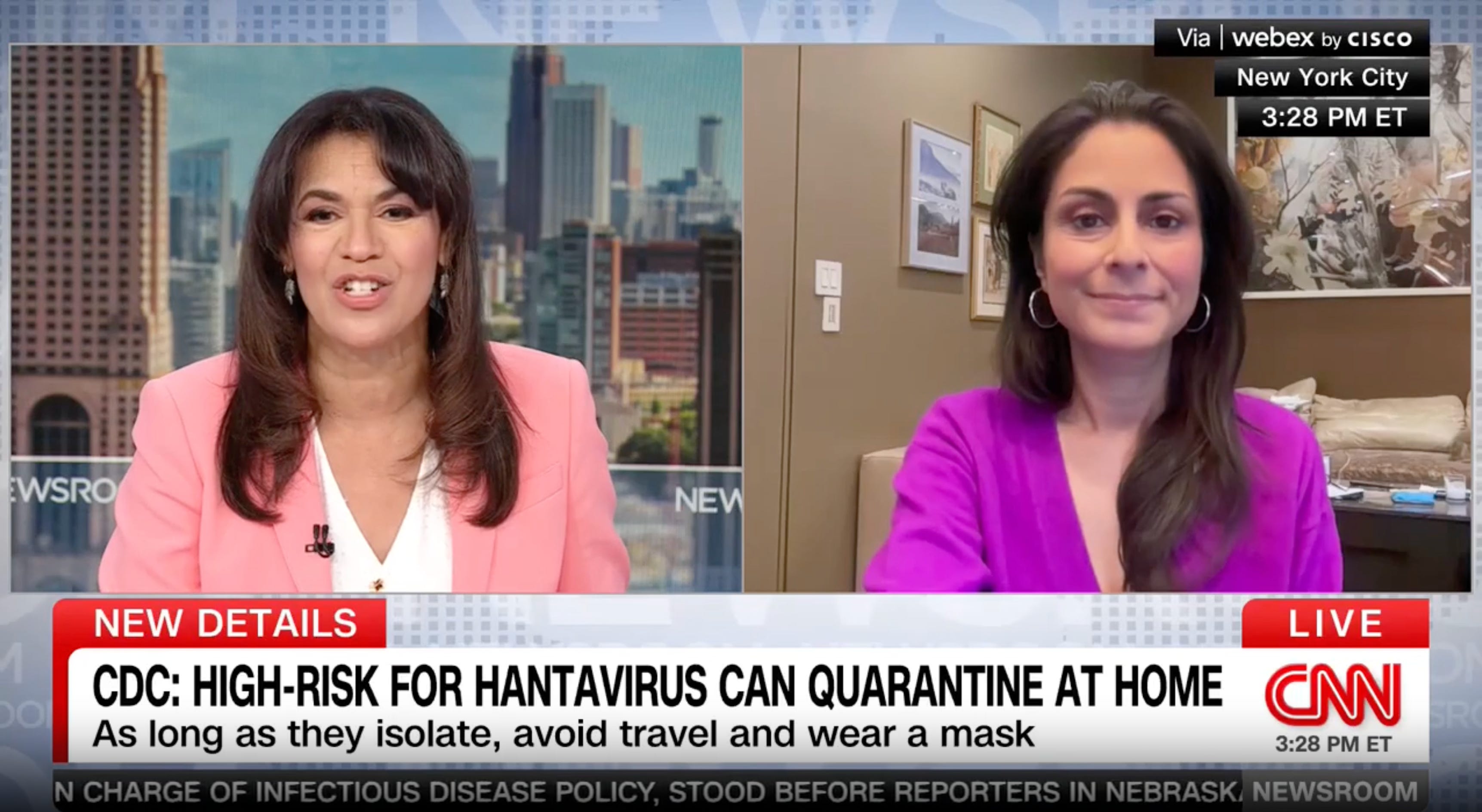
Am I worried about hantavirus? No. The risk to the general public is very low. The 41 contacts are accounted for, cooperating, and as of this writing, symptom-free. This will likely end quietly in mid-June.
What concerns me is Ebola in Congo. Bundibugyo ebolavirus is a species with no vaccine, no proven treatment, and already in an urban center of two million. But what concerns me about both outbreaks is the legal and institutional architecture underneath the response. It is thinner than most people realize, and we did that to ourselves.
The federal quarantine list does not include hantavirus.
Under 42 U.S.C. § 264, the federal government can detain or conditionally release individuals to prevent the spread of communicable diseases, but only for diseases specified by executive order. The current list covers cholera, diphtheria, tuberculosis, plague, smallpox, yellow fever, viral hemorrhagic fevers, severe acute respiratory syndromes, pandemic influenza, and measles.
Hantavirus is not on that list. COVID fell under the “severe acute respiratory syndromes” umbrella. Hantavirus has no such hook. The CDC can issue guidance. It cannot compel anyone to follow it — not during the COVID pandemic and not now.
Federal authority also applies mainly at ports of entry. It does not easily reach someone already at home in Arizona or Texas. For domestic enforcement, you need state power.
State authority is where enforcement lives. It has been deliberately weakened.
Quarantine and isolation powers in the United States rest primarily with the states under what constitutional law calls “police powers.” Every state has quarantine statutes. They used to be broad. After COVID, many were gutted.
By September 2021, at least 26 states had enacted laws permanently weakening government authority to protect public health. In at least 16 states, legislators specifically limited the power of health officials to order quarantine or isolation. A Stanford Law analysis found that from January 2021 through May 2022, state legislatures adopted 191 bills addressing public health authority. All but 17 imposed new constraints.
The specifics vary. The pattern is consistent. Ohio gave its legislature the power to rescind any health department order and barred reissuing substantially similar orders. Utah removed the state health officer’s authority to issue isolation or quarantine orders entirely. Arkansas required a medical diagnosis before officials could order someone to quarantine. Montana prohibited restricting attendance at places of worship or private businesses during emergencies unless a person is already confirmed and under a quarantine order.
Public trust in health departments had collapsed to roughly 40% by spring 2021. State legislators obliged and passed laws in response to scale back those powers.
What compulsory quarantine actually looks like in practice.
What does compulsory quarantine look like if a hantavirus contact stops cooperating? A state health officer issues a quarantine order. If the person refuses, the health department seeks a court order. Most states require a hearing and a “clear and convincing evidence” standard. Violation is typically a criminal misdemeanor. Some states can authorize physical detention, but this is rare, slow, and politically radioactive.
The process takes days. During those days, the person moves freely.
For hantavirus, this is academic. Everyone is cooperating. For a future pathogen with higher transmissibility, or for the Ebola outbreak now spreading across borders in central Africa, the question is what happens when cooperation is incomplete.
You cannot strip these authorities during one outbreak and expect them for the next.
The post-COVID rollbacks were a political response to a specific crisis. The laws they passed outlast the crisis that produced them. They apply to every communicable disease that comes after: hantavirus, Ebola, whatever emerges next.
The hantavirus response is working because 41 people are saying yes. The legal architecture underneath — the backstop that would matter if someone said no — has been deliberately thinned by the same public that now expects protection from the next threat.