


When the economy reaches the health department
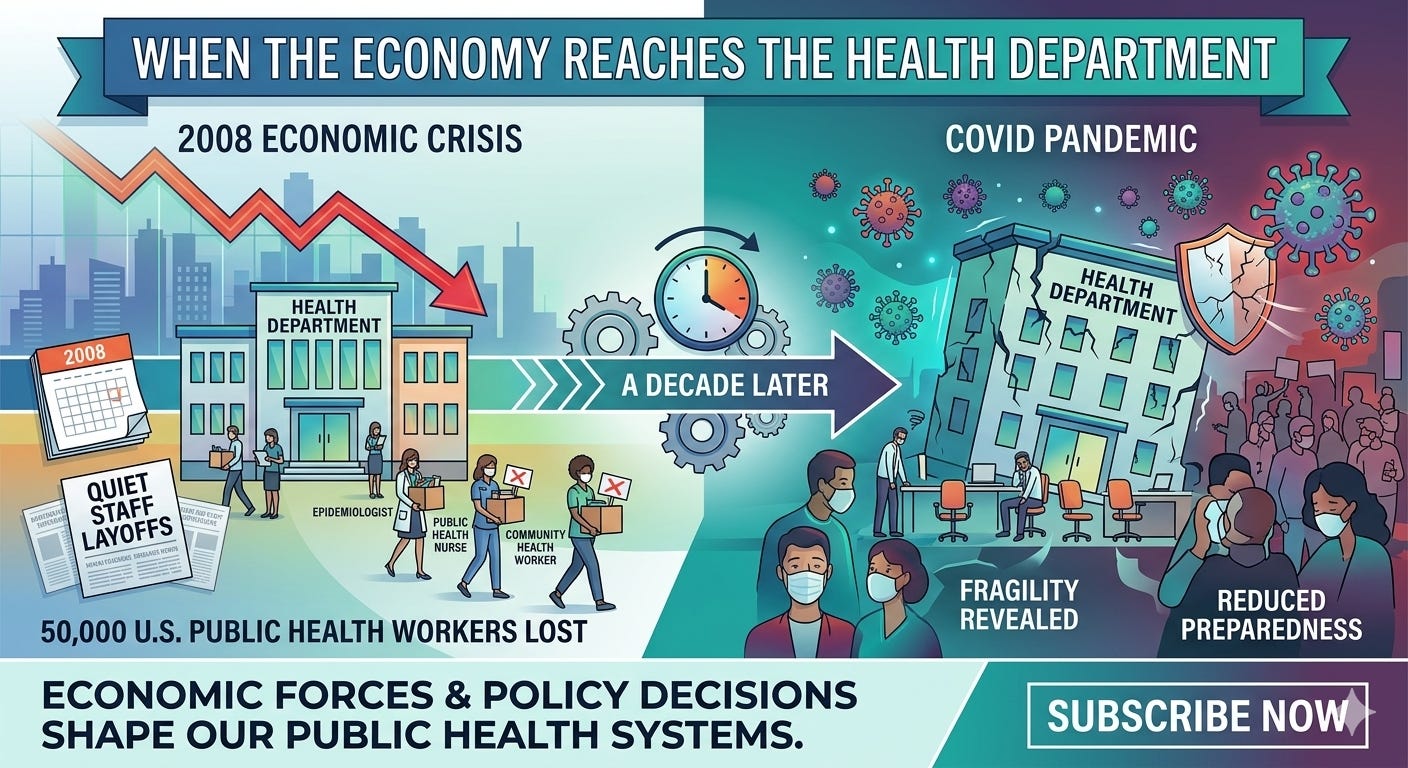
After the 2008 financial crisis, U.S. public health departments lost about 50,000 workers.
Epidemiologists. Public health nurses. Community health workers.
These layoffs did not make national headlines. But their effects became clear a decade later, when COVID showed how fragile many health departments had become.
This newsletter examines how policy decisions and economic forces shape the public health systems we rely on.
I remember that time well. I was an Assistant Commissioner at the New York City Department of Health and Mental Hygiene. I was asked to prepare plans to lay off about 20% of our staff in one year, with more cuts in subsequent years.
That experience taught me something important. Economic crises do not only affect markets or government budgets. They can quietly reshape the systems that protect public health.
Now, another economic shock may be forming.
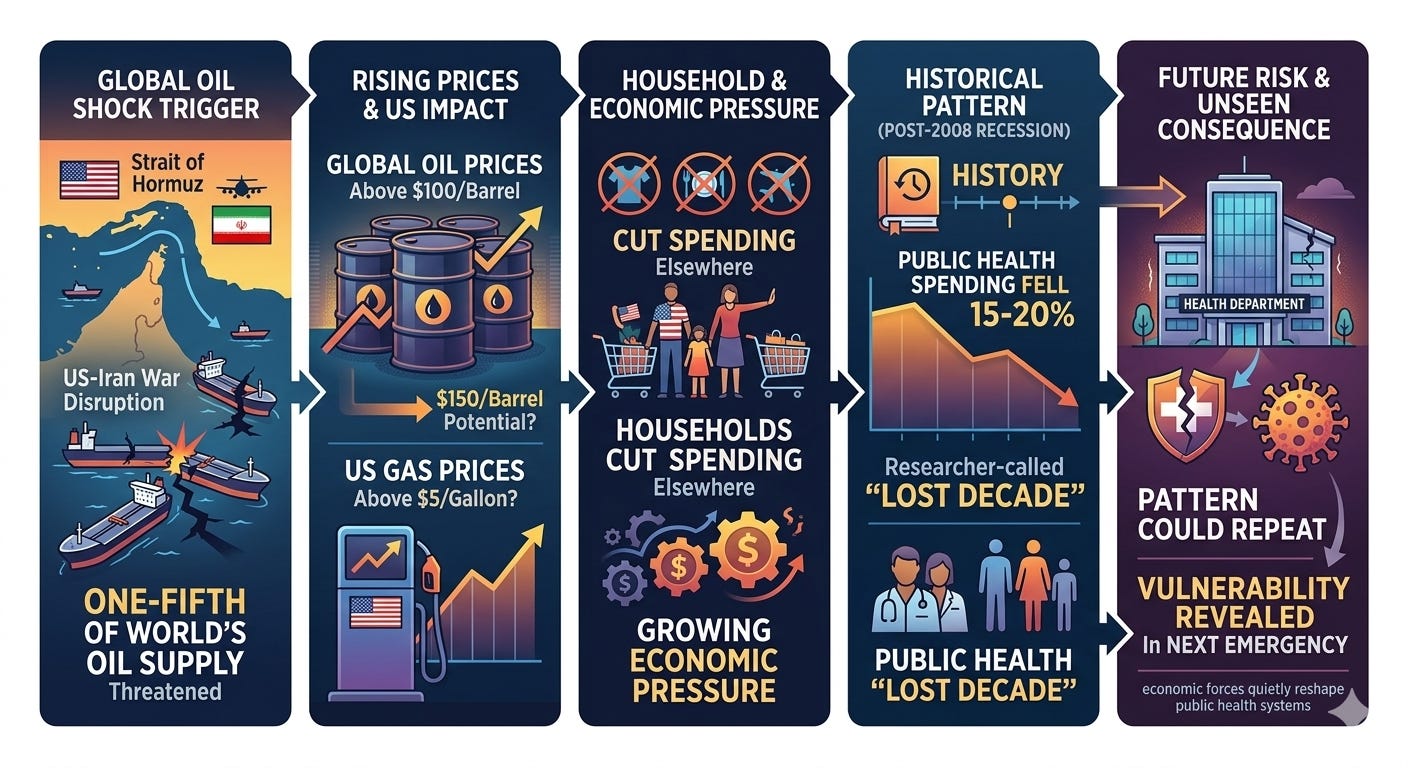
The war between the United States and Iran has disrupted oil flows through the Strait of Hormuz. This narrow waterway normally carries about one-fifth of the world’s oil supply. Oil prices have already risen above $100 per barrel, and analysts warn they could climb much higher.
If oil reaches $150 per barrel, gas prices in the United States could rise above $5 per gallon. When gas gets that expensive, households often cut spending elsewhere in the economy.
After the 2008 recession, public health spending in many places fell by 15-20%, adjusted for inflation. Researchers later called this period a “lost decade” for the public health workforce.
If economic pressure grows again, the same pattern could repeat. The effects might not become clear until the next public health emergency.
When recessions weaken public health
The 2008 financial crisis did more than disrupt markets. It also weakened the systems that prevent disease.
As tax revenues dropped between 2008 and 2010, state and local governments faced large budget gaps. Public health departments rely heavily on these funds, so they were hit especially hard.
Between 2008 and 2012, real public health spending fell in many places. Budget cuts soon led to job losses. By 2014, local health departments across the United States had lost about 50,000 employees.
Many of the jobs lost were key public health roles:
epidemiologists
public health nurses
laboratory scientists
environmental inspectors
health educators
These workers investigate outbreaks, track diseases, and run vaccination programs.
When these jobs disappear, health departments lose both staff and expertise. In some places, agencies were left doing only basic regulatory work, such as inspections, instead of prevention programs.
At the same time, recessions create new health risks.
After the 2008 recession, mental health problems increased. Depression and anxiety rose as unemployment grew. Suicide rates also increased in several countries.
Economic stress was also linked to rising opioid use and alcohol-related deaths. The opioid crisis grew fastest in regions that lost many jobs during the recession.
Financial strain also changed everyday health behavior:
people delayed medical care
prescriptions went unfilled
preventive visits declined
food insecurity increased
housing became less stable
These problems build slowly but can harm population health for years.
In short, recessions hit public health systems from both sides. Governments cut prevention programs at the same time that health risks in the population increase.
At first, these changes may go unnoticed. After 2008, the damage to public health systems received little attention.
But the effects became clear a decade later. When COVID arrived, many health departments were already struggling after years of budget cuts, hiring freezes, and reduced preparedness programs.
Why the Iran war raises economic concerns
The question now is whether another economic shock could start the same cycle again.
The current crisis involves a familiar risk: an energy shock.
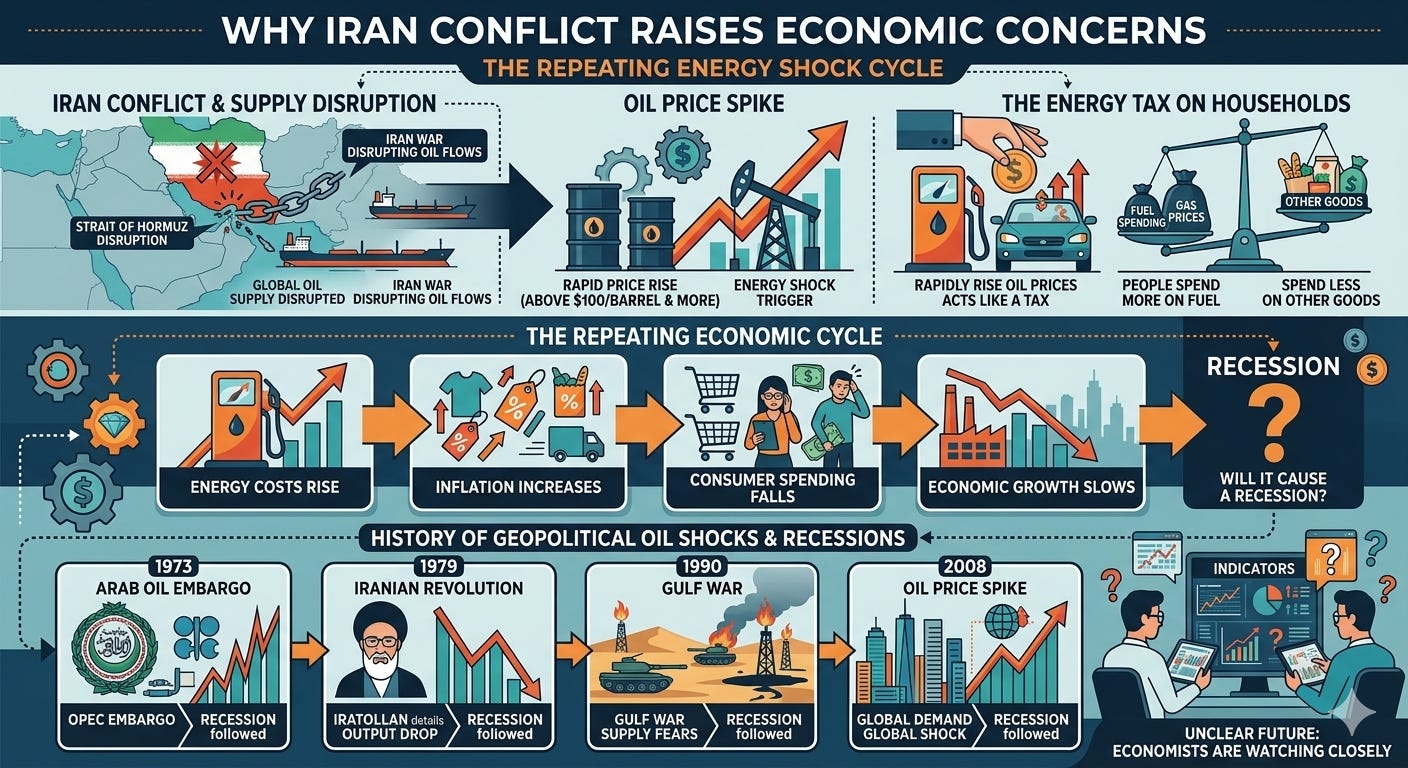
When oil prices rise quickly, it works like a tax on households. People spend more on fuel and less on other goods.
Several past recessions followed oil shocks, including:
the 1973 Arab oil embargo
the 1979 Iranian revolution
the 1990 Gulf War
the 2008 oil price spike
The pattern is similar each time. Energy costs rise, inflation increases, consumer spending falls, and economic growth slows.
It is still unclear whether the current disruption will cause a recession. But economists are watching closely.
Why public health and prevention funding disappears after crises
Public health holds a strange place in government budgets.
Prevention programs create large long-term benefits by keeping people healthy. Yet they are often treated as optional spending.
Some critics, including voices in the “Make America Healthy Again” movement, argue that public health has failed at prevention. Prevention has always been the core of public health. The problem is not that we fail to understand prevention. It’s that governments and taxpayers repeatedly choose not to fund it. These are the programs they cut first.
The result is a repeating cycle: investment grows during emergencies and fades once the crisis passes.
The question we should be asking
The United States is not yet in a crisis like the one in 2008.
Domestic oil production is higher today, and banks are more tightly regulated.
Still, warning signs are visible: geopolitical conflict, rising energy prices, slowing economic growth, and large federal deficits.
If these pressures lead to a recession, the budget choices made in the next few years could shape public health systems for the next decade.
Having lived through layoffs in a health department, I know how quickly economic shocks become real. Budget crises soon turn into hiring freezes, program cuts, and fewer people working to stop disease outbreaks.
Public health systems rarely collapse all at once.
They weaken slowly — budget cycle by budget cycle — until the next epidemic shows what years of quiet cuts have taken away.
Question for readers
If another economic downturn happens, what should governments protect first: short-term fiscal stability, or the prevention systems meant to protect us from the next pandemic?
Let me know in the comments.