


Shots you can’t biohack
Somewhere on your feed right now, a guy is peptide-maxxing. He’s got a fridge shelf of vials. He’s got a dosing spreadsheet. He’s got a supplier in a group chat. He’s spending a few hundred dollars a month to, he says, train his immune system, but those gray-market peptides don’t have placebo-controlled randomized clinical trials behind them.
He’s willing to inject an at-best experimental compound for some abstract promise of living longer. Meanwhile, a flu shot delivers a concrete one for $0 out of pocket, with proven safety and efficacy.
The American Academy of Pediatrics, the American College of Obstetricians and Gynecologists, the American Academy of Family Physicians, and the Infectious Diseases Society of America issued vaccination recommendations for this fall/winter season. Those recommendations are based on evidence-based reviews of the influenza, COVID, and RSV vaccines. The Vaccine Integrity Project (VIP) conducted those reviews, and JAMA published them today. The VIP launched on a $240,000 unrestricted gift from Alumbra, Christy Walton’s foundation. These same medical societies released last year’s fall/winter vaccination recommendations without the federal government, too.
Those three reviews included 299 studies. That’s legit immune-maxxing.
The numbers behind this fall’s shots.
COVID vaccination was 53% effective in preventing hospitalization in adults 65 and older last season. In kids 9 months to 4 years old, it cut COVID-related emergency department visits by 76%.
Across eight seasons of national data, flu shots were 80% effective in preventing lab-confirmed flu deaths in kids and teens. In older adults, the high-dose shot beat the standard dose on hospitalization by 44%.
RSV vaccination was 83% effective in preventing RSV hospitalization in older adults. Nirsevimab, the antibody shot for babies, cut RSV hospitalization somewhere between 64% and 93%.
The VIP also reviewed the data on flu, COVID, and RSV safety. A study of almost 10 million people found no increased risk of serious harms after a flu shot, including Guillain-Barré syndrome. Three randomized trials of the RSV vaccine covered over 130,000 people. None found a case of Guillain-Barré syndrome. But one Scottish study of adults aged 74 to 80 found an increased risk in the 42 days after an RSV shot. Guillain-Barré is rare. Neither result settles the question. The FDA added a Guillain-Barré warning to both RSV vaccine labels in January 2025, but it also says the evidence falls short of establishing cause.
You could skip the vaccines and rawdog flu season. The CDC estimates that flu caused 390,000 to 800,000 hospitalizations and at least 24,000 deaths in the US last season.
Your shots are still covered, but read the fine print.
For most people this fall, the shots are still covered.
Private health insurance still covers your flu, COVID, and RSV shots at $0 in most cases. The insurance lobby AHIP says its member plans will keep them free through the end of 2027. Aetna, Cigna, Humana, Elevance, and Blue Cross Blue Shield plans are all in. Nobody should skip a shot this month because they’re worried the shots aren’t covered. They are.
But read the AHIP pledge more carefully. Member plans will cover “all ACIP-recommended immunizations.” ACIP is the CDC’s vaccine advisory committee, not a medical society.
In September 2025, AHIP promised the shots recommended “as of September 1, 2025,” but then rewrote its pledge in May 2026.
AHIP’s pledge is a trade association commitment rather than a law, so nobody enforces it. The current pledge expires on December 31, 2027. It doesn’t reach self-funded employer plans, Medicaid, CHIP, or Vaccines for Children (VFC). Self-funded plans cover 67% of workers with job-based insurance. That share climbs to 80% at large firms. Employers design those plans.
Kennedy removed all 17 members of ACIP in June 2025 and named his own. In September the new panel voted to drop the combined MMRV shot for children under 4. The AAP still recommends it. For six months, uninsured children and children on Medicaid lost access to it through VFC. Judge Murphy's March order stayed that vote, so it's back, for now, pending HHS's appeal.
Judge Brian Murphy stayed 13 ACIP appointments on March 16, 2026, in AAP v. Kennedy. The same order stayed the panel’s votes back to June 2025. The judge found no quorum in the panel as constituted. HHS Secretary Robert F. Kennedy Jr. says the ruling left ACIP “unable to carry out its core responsibilities.” ACIP hasn’t met since December 2025. HHS rewrote the committee’s charter twice, in April and May 2026. The May version handed Kennedy control over membership and the meeting calendar.
How federal law turns medical recommendations into insurance coverage.
In the US, a vaccine recommendation isn’t just advice. It’s a payment trigger.
The Affordable Care Act lists the shots insurers must cover, including immunizations with an ACIP recommendation “in effect.” The CDC director has to sign off before those vaccines are included on the CDC’s schedule.
Section 1928 of the Social Security Act requires Medicaid and VFC to provide ACIP-recommended pediatric vaccines. VFC buys the shots for more than half of American children.
What is an orphaned recommendation?
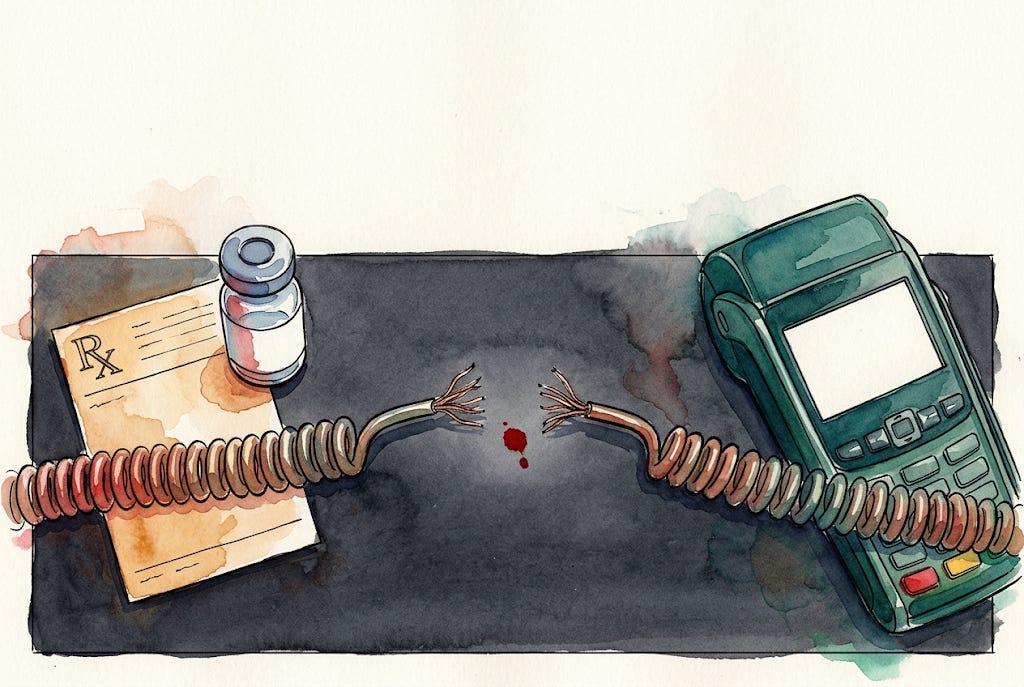
Four medical societies just told you what vaccines to get this fall, but every payment mechanism in the country is still based on ACIP recommendations.
Call it an orphaned recommendation: a clinical recommendation with no payment trigger. Doctors know what to do. But no federal law requires insurance companies, Medicaid, or VFC to follow medical societies’ recommendations.
Congress. Your state. Your employer.
Congress can amend Section 2713 of the ACA, which currently names four sources of preventive care recommendations: the ACIP, the US Preventive Services Task Force, the Bright Futures project, and the Women’s Preventive Services Initiative. The AAP writes Bright Futures under an agreement with the Health Resources and Services Administration. ACOG runs the Women’s Preventive Services Initiative under another. Both sets of recommendations already trigger coverage, for well-child visits and for women’s health. Neither covers vaccines.
The states have a lot of power over vaccine coverage, too. KFF’s tracker counts 22 states that now name non-federal groups, such as the AAP and ACOG, as sources of vaccine advice. Thirteen states require state-regulated insurers to cover the vaccines regardless of federal recommendations.
Your employer also has a lot of power here. For two-thirds of workers with employer-sponsored insurance, employers write the rules. Their benefits team answers to employees like you.
Congress. Your state. Your employer.