


The simple scan that can predict your risk of a heart attack
Heart disease is still the leading cause of death in the United States.
But heart attacks don’t come out of nowhere. The damage that causes them often begins years, often decades, earlier as plaque slowly builds inside the arteries.
Today, doctors can detect plaque long before symptoms appear using a simple CT scan called a coronary artery calcium (CAC) scan that can detect plaque inside the arteries.
Yet most Americans never receive this test.
Many preventive cardiologists believe this scan is one of the most powerful and underused tests in medicine.
New guidelines from the American College of Cardiology and the American Heart Association may change that. The updated recommendations encourage doctors to look for heart disease risk earlier and treat high cholesterol more aggressively when needed.
The goal is simple: stop heart disease before it starts.
Heart disease starts earlier than you think
Heart disease develops slowly over time.
When LDL cholesterol, often called “bad cholesterol”, circulates in the bloodstream, some of it can stick to artery walls. Over many years, this forms plaque.
Plaque narrows the arteries and increases the risk of heart attacks and strokes.
Scientists now know that lifetime exposure to LDL cholesterol is one of the biggest drivers of heart disease. The longer someone lives with high LDL levels, the higher their risk later in life.
That is why the new guideline encourages earlier action.
Healthy habits are still the first step. Doctors recommend:
healthy eating
regular exercise
maintaining a healthy weight
avoiding tobacco
But if cholesterol levels remain high, doctors may consider medication sooner than they did in the past.
Lower cholesterol for longer periods provides stronger protection against heart disease.
A better way to estimate risk
The new guideline also introduces a new tool to estimate heart disease risk.
It is called PREVENT, short for Predicting Risk of Cardiovascular Disease EVENTs.
Doctors use this calculator to estimate a person’s chance of having a heart attack or stroke in the next 10 years.
It uses common information from routine checkups such as:
cholesterol levels
blood pressure
age
smoking status
other health factors
Doctors use the calcium score to help predict heart attack risk and decide whether cholesterol-lowering medication is needed. Calcium in the arteries is a sign that plaque in the arteries has already started to form.
“With this new assessment tool, we can better estimate cardiovascular risk using health information already obtained during an annual physical,” said Dr. Roger Blumenthal, chair of the guideline writing committee and director of the Johns Hopkins Ciccarone Center for the Prevention of Heart Disease.
Doctors can also personalize the score by considering additional risk factors.
Clear targets for cholesterol
The new guideline also restores clear LDL cholesterol targets.
For many patients:
Moderate risk → LDL below 100 mg/dL
Higher risk → LDL below 70 mg/dL
Known heart disease → LDL below 55 mg/dL
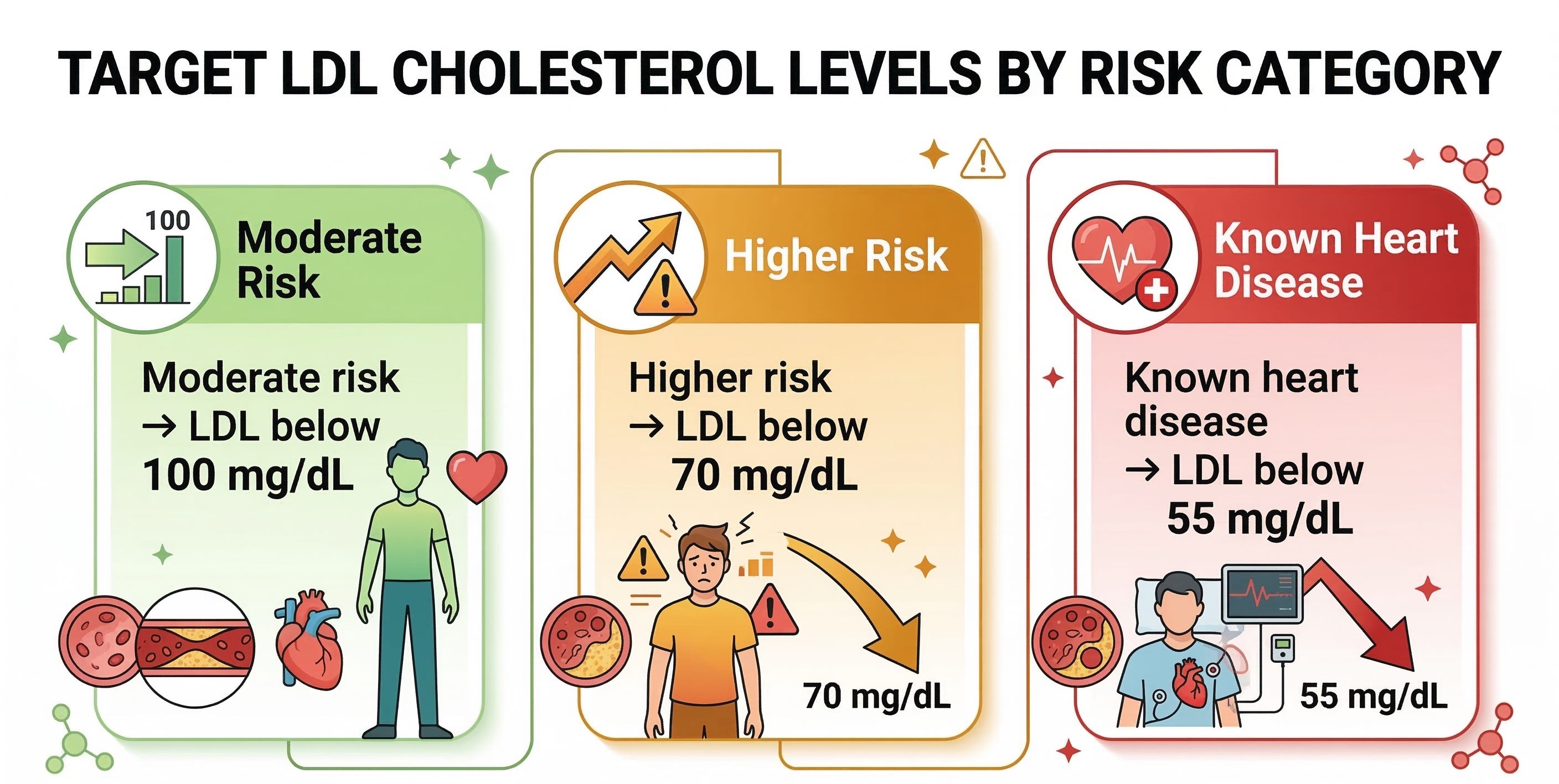
“In general, lower LDL is better, especially for people at increased risk for a heart attack or stroke,” said Dr. Pamela Morris, vice-chair of the guideline writing committee.
Clinical trials have shown that lowering LDL cholesterol reduces the risk of heart attacks and strokes.
The scan that can reveal hidden heart disease
A coronary artery calcium scan is a quick CT scan that measures calcium in the arteries of the heart.
Calcium is a sign that plaque has already formed.
The result is given as a calcium score.
Doctors often interpret the score like this:
CAC score: 0
No calcium detected. The risk of a heart attack is very low.
CAC score: 1–99
Early plaque is present.
CAC score: 100–299
Clear plaque buildup.
CAC score: 300 or higher
Significant plaque in the arteries.
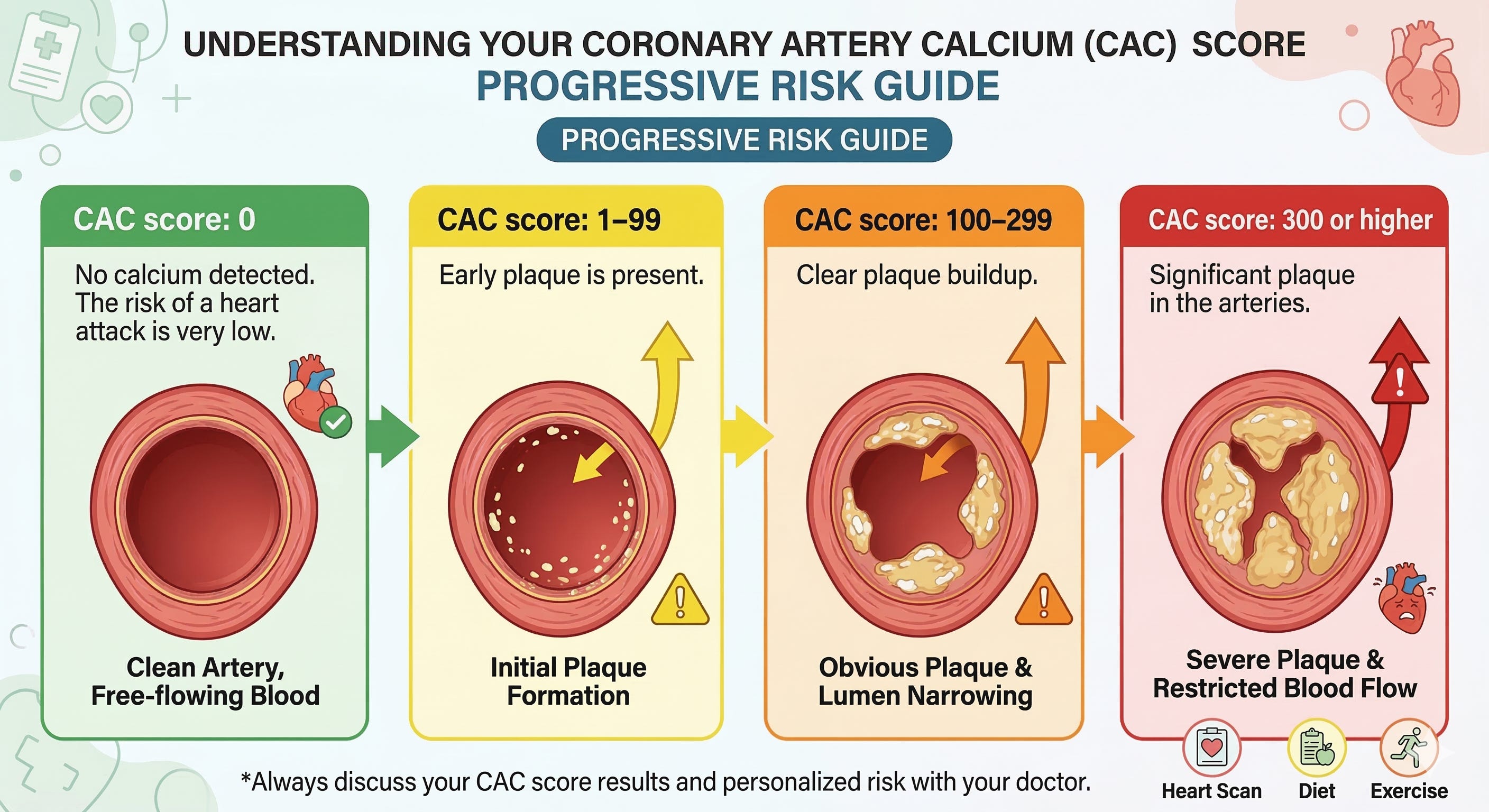
This information can change treatment decisions.
Instead of estimating risk using cholesterol levels alone, doctors can see whether plaque is already forming inside the arteries.
A powerful test few people get
Despite strong evidence, CAC scans are still not widely used.
One reason is insurance coverage. Many insurance plans consider the scan a screening test and do not pay for it.
Patients often pay out of pocket, though the cost is usually $100 to $200.
Another reason is awareness. Many patients, and even some doctors, are unfamiliar with how useful CAC scans can be for people whose risk level is unclear.
The new cholesterol guidelines emphasize CAC scans as a helpful tool in these situations.
For preventive cardiologists, the scan offers something powerful: a direct look inside the arteries.
Most heart disease can be prevented
Cardiologists say one of the most important facts about heart disease is that much of it can be prevented.
“We know 80% or more of cardiovascular disease is preventable and elevated LDL cholesterol is a major part of that risk,” said Blumenthal.
Lifestyle changes remain essential. But the guideline reflects a growing understanding that medication may sometimes be needed sooner.
“If lipid numbers aren’t within the desirable range after lifestyle optimization, we should consider adding lipid-lowering medication earlier than we would have considered 10 years ago,” Blumenthal said.
Lower LDL levels for longer periods offer stronger protection against heart attacks and strokes.
“People who maintain low levels of LDL cholesterol at earlier ages are much less likely to develop atherosclerotic disease decades later,” Morris said.
Question for readers
Have you ever had a coronary calcium scan, or has your doctor recommended one?
Let me know in the comments.