


Nearly half of Americans say they have skipped taking medicine because of the cost.
That means millions of people are making a choice doctors never want patients to make: protect their health or protect their wallet.
A new national poll shows the problem may be getting worse. And while a new federal program called TrumpRx promises to lower prescription drug prices, it may only help a narrow group of patients.
Here’s what the data shows.
Millions of Americans are skipping their prescription drugs
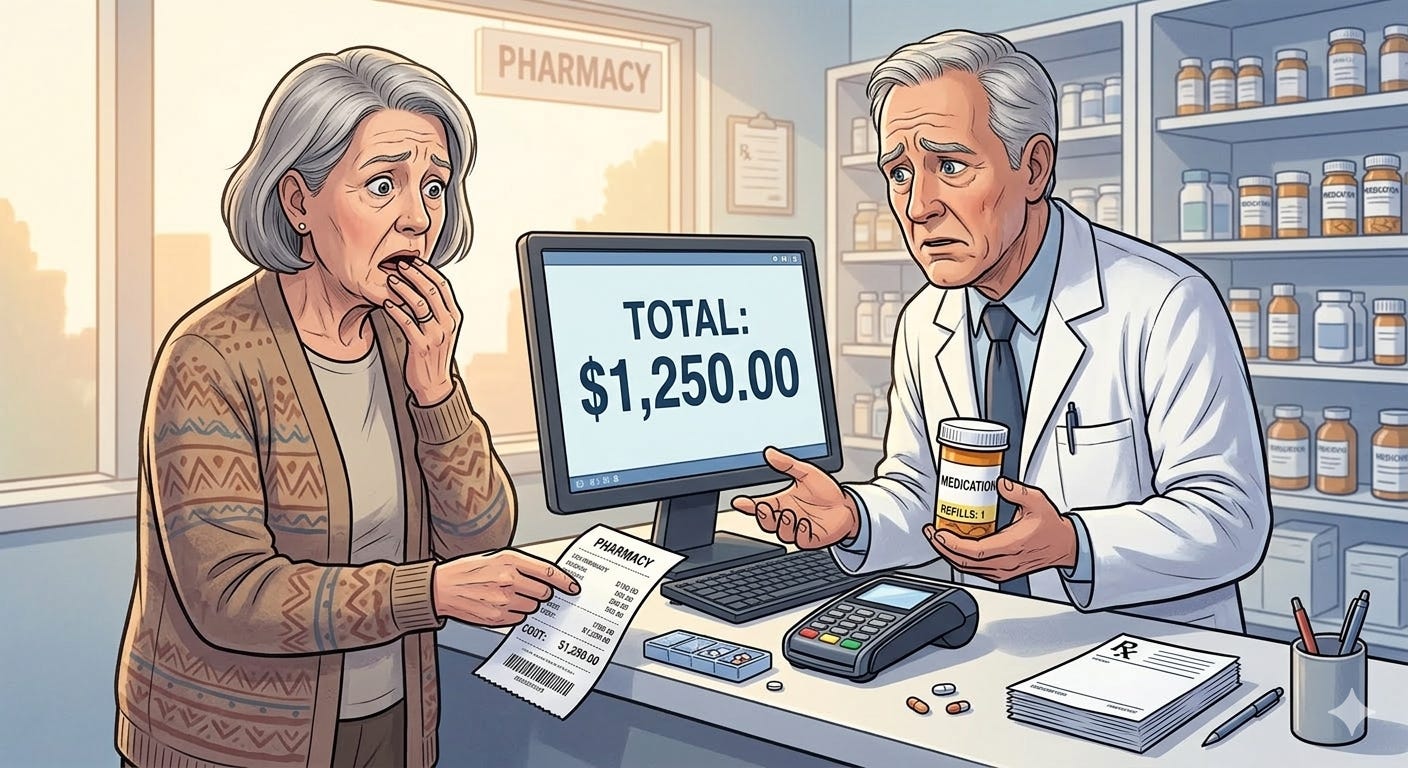
Every month, millions of Americans face the same quiet decision at the pharmacy counter: fill the prescription, or save the money.
Too often, the choice is not what their doctor recommended.
A new national poll from KFF shows why. Nearly six in ten Americans say they worry about being able to afford their prescription drugs, and 43% say they skipped taking medication as prescribed in the past year because of cost.
These numbers reveal more than a moment of sticker shock at the pharmacy. They point to a deeper problem in the U.S. health system: medicines exist, but many patients still struggle to pay for them.
What patients do when medicine is too expensive
If these concerns were only theoretical, the debate in Washington might look very different.
But the poll shows the consequences are already shaping how people take their medications.
According to the survey, 43% of adults say they did not take a prescription drug as directed in the past year because of cost.
Patients cope in different ways.
Some never fill the prescription at all. Others stretch their medication by cutting pills in half or skipping doses so the medicine lasts longer. Some turn to over-the-counter drugs instead of the treatment their doctor recommended.
Doctors warn that these choices can carry serious health risks. Skipping blood pressure medication can increase the chance of heart attack or stroke. Missing diabetes treatments can lead to long-term complications.
In other words, the debate about drug prices is not just about policy. For many Americans, it determines whether they can follow their doctor’s instructions at all.
Subscribe for clear, data-driven explanations of the policies shaping American health care.
New posts break down the research, polling, and politics behind the headlines.
Americans want the government to lower drug prices
Despite deep political divisions in the United States, prescription drug prices are one issue where many voters agree.
The poll shows about 72% of Americans believe the government should do more to limit drug prices.
That support crosses party lines. Majorities of Democrats, Republicans, and independents say the government should play a larger role in controlling drug costs.
One reason for the frustration is simple: the United States is unusual among wealthy countries.
In many other nations, governments negotiate directly with pharmaceutical companies to set drug prices. In the U.S., companies largely set their own prices, and the system of insurers, pharmacy benefit managers, and discounts can make the final cost hard for patients to understand.
What TrumpRx is supposed to do
The Trump administration recently launched TrumpRx, a website designed to help consumers find lower prices for certain prescription drugs.
The platform allows patients to compare prices and purchase some medications directly from drug manufacturers or pharmacies without using insurance.
The idea is simple: if patients can see prices more clearly, they may be able to shop for better deals.
But awareness of the program is still limited.
Only about one-third of Americans say they have heard of TrumpRx, and just 7% say they have used it to compare drug prices.
Who TrumpRx could help and who it won’t
Even if TrumpRx expands, its benefits may be uneven.
The people most likely to benefit are Medicare patients, especially seniors who take expensive brand-name medications. These patients often face high out-of-pocket costs each year, so even modest price reductions could make a noticeable difference.
But many Americans may see little change.
People with employer-sponsored insurance often already receive negotiated discounts through their health plans. For them, using insurance may still be cheaper than paying the cash price through TrumpRx.
Uninsured patients may also struggle to benefit. Even a discounted price can still be out of reach for someone paying entirely out of pocket.
The bigger healthcare cost problem
Prescription drugs are one of the most visible health expenses Americans face.
But they are only part of the system.
Hospital care and physician services make up a larger share of total health-care spending in the United States. That means lowering drug prices alone will not solve the broader problem of rising medical costs.
Still, prescription drugs remain a daily reality for millions of patients.
Every refill, every skipped dose, and every pharmacy receipt keeps the debate over drug prices alive.
If you found this useful, consider sharing it with someone interested in health policy.
Questions for readers
Prescription drug prices affect millions of Americans, but the experience can look very different depending on insurance, income, and the medications someone needs.
I’m curious about your experience:
Have you ever skipped filling a prescription, delayed taking medication, or searched for discounts because of the cost?
If you take prescription medications regularly, have you noticed prices going up in recent years?
If you’re comfortable sharing, I’d love to hear your experience in the comments. Stories like these often explain the drug pricing problem better than any statistic.