The acknowledgment is due today.
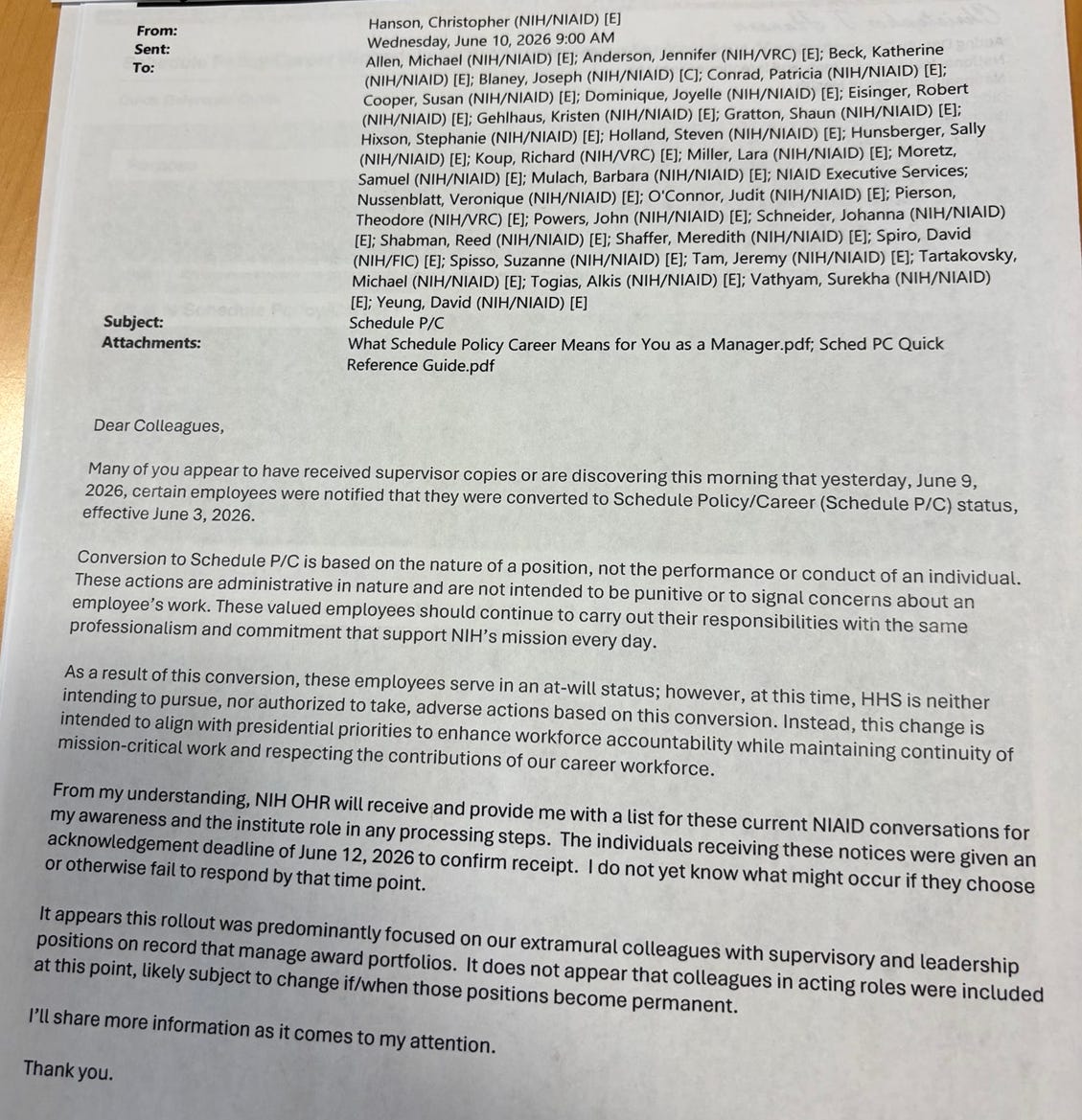
On June 9th, a group of senior staff at the National Institutes of Health got an email giving them three days to sign a form and send it back.
These are the people who decide which medical research the government pays for: which vaccine gets tested, which treatment moves ahead, which outbreak gets a fast response. The email was about their own jobs.
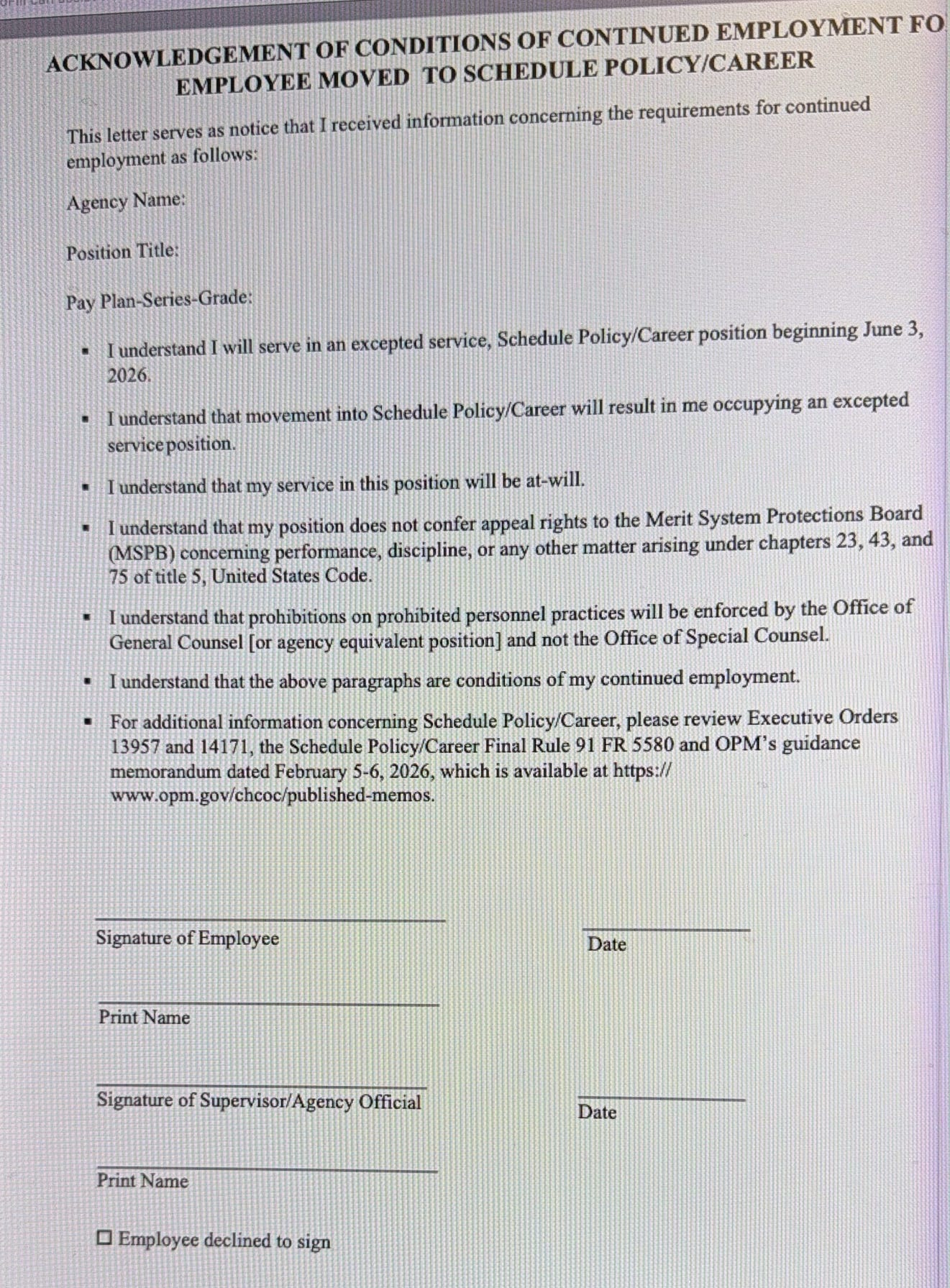
It told them their jobs had been moved into a new category six days earlier, listed what they had lost, and asked them to sign that they understood. The change had already happened, so signing wouldn’t undo anything. It just put on the record that they had been told.
The official story: routine, not punishment.
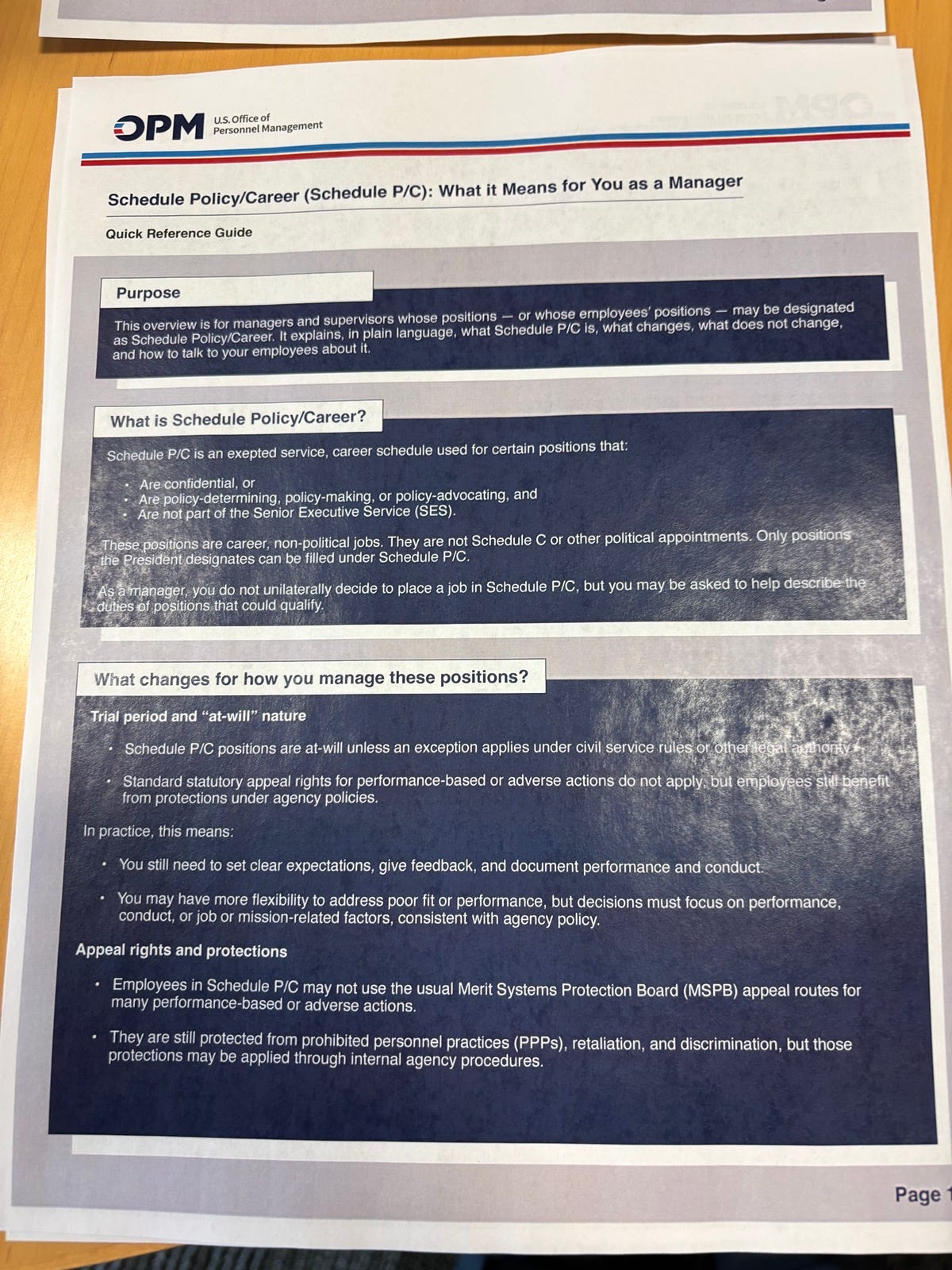
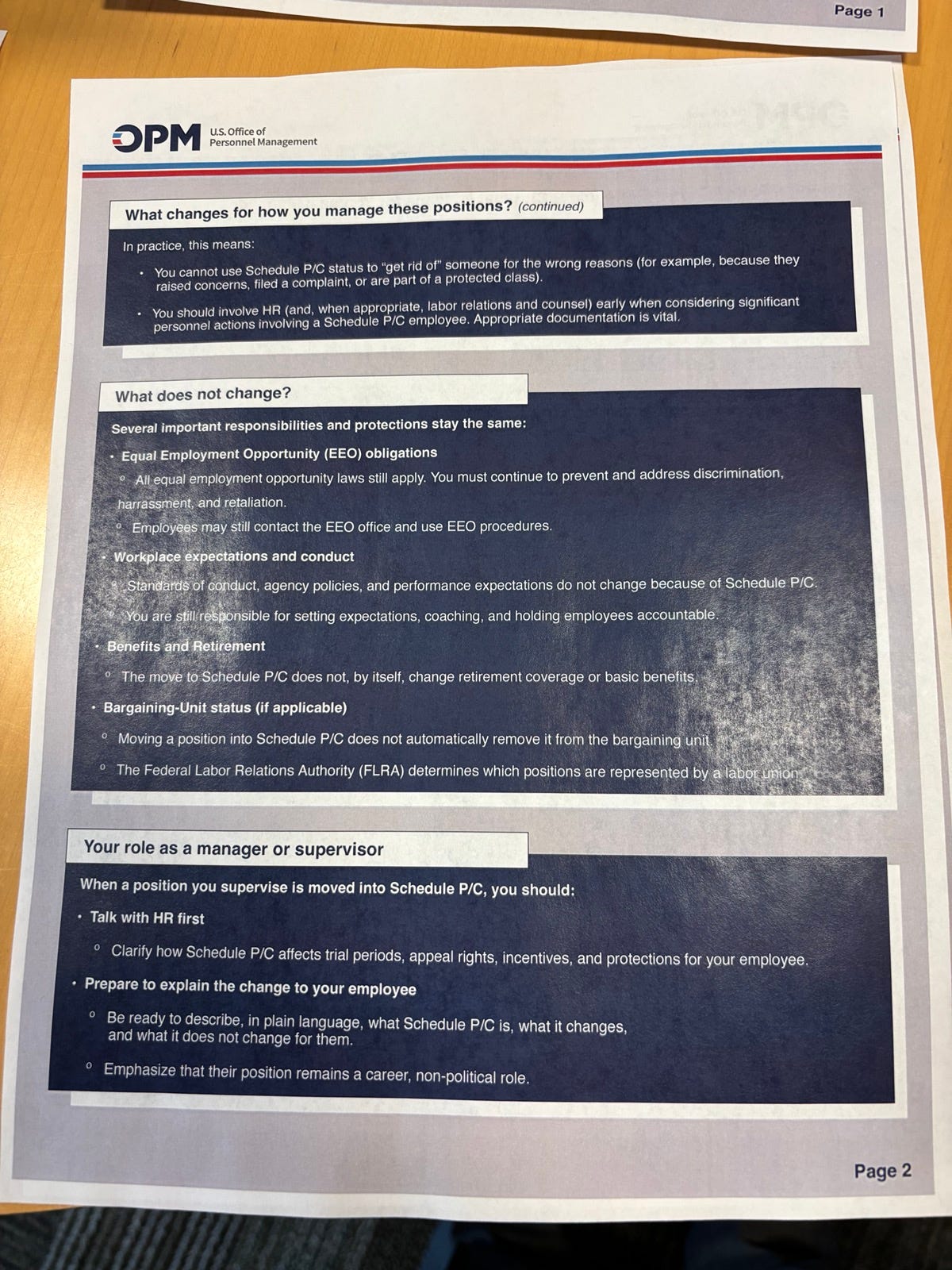
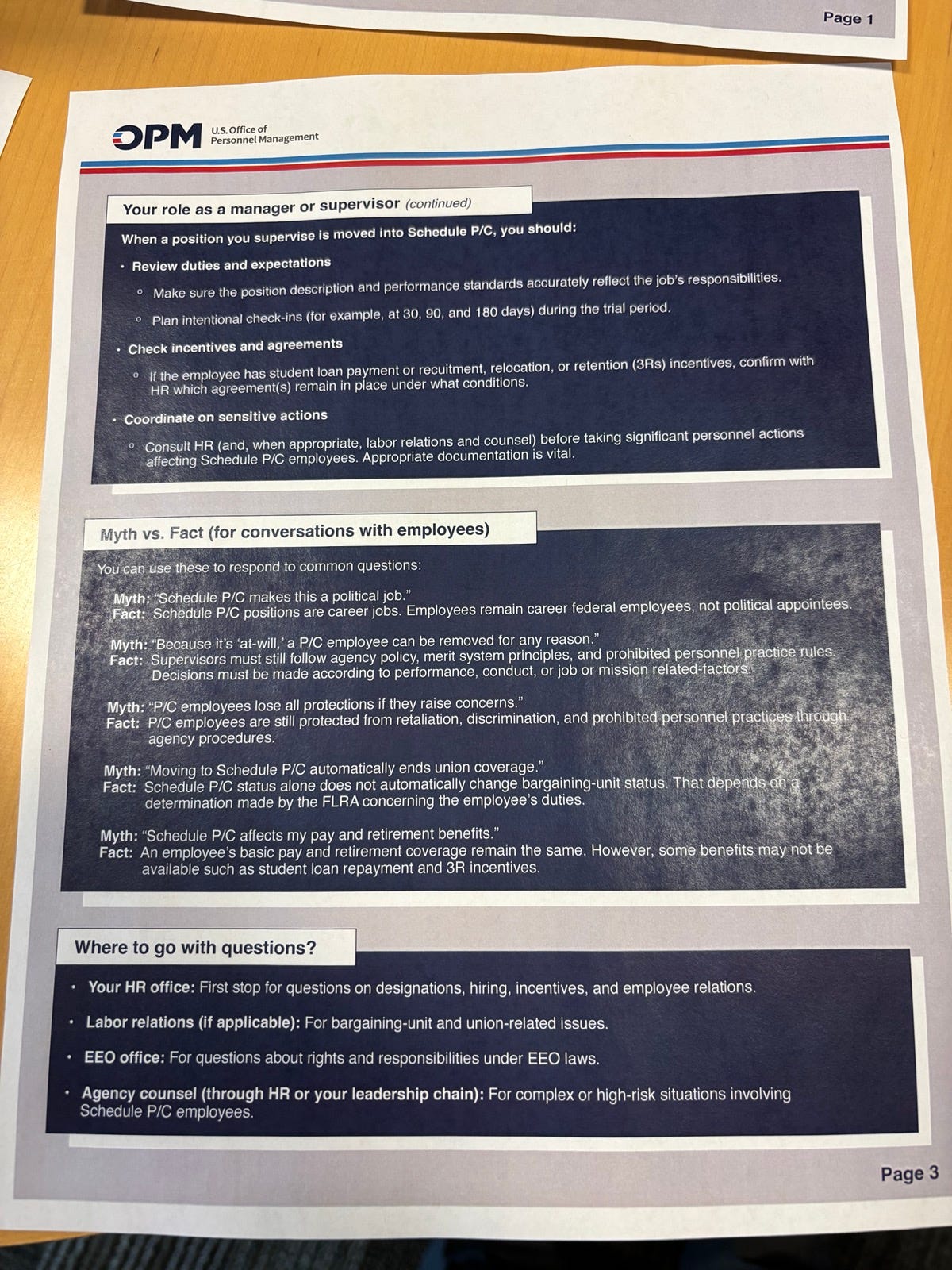
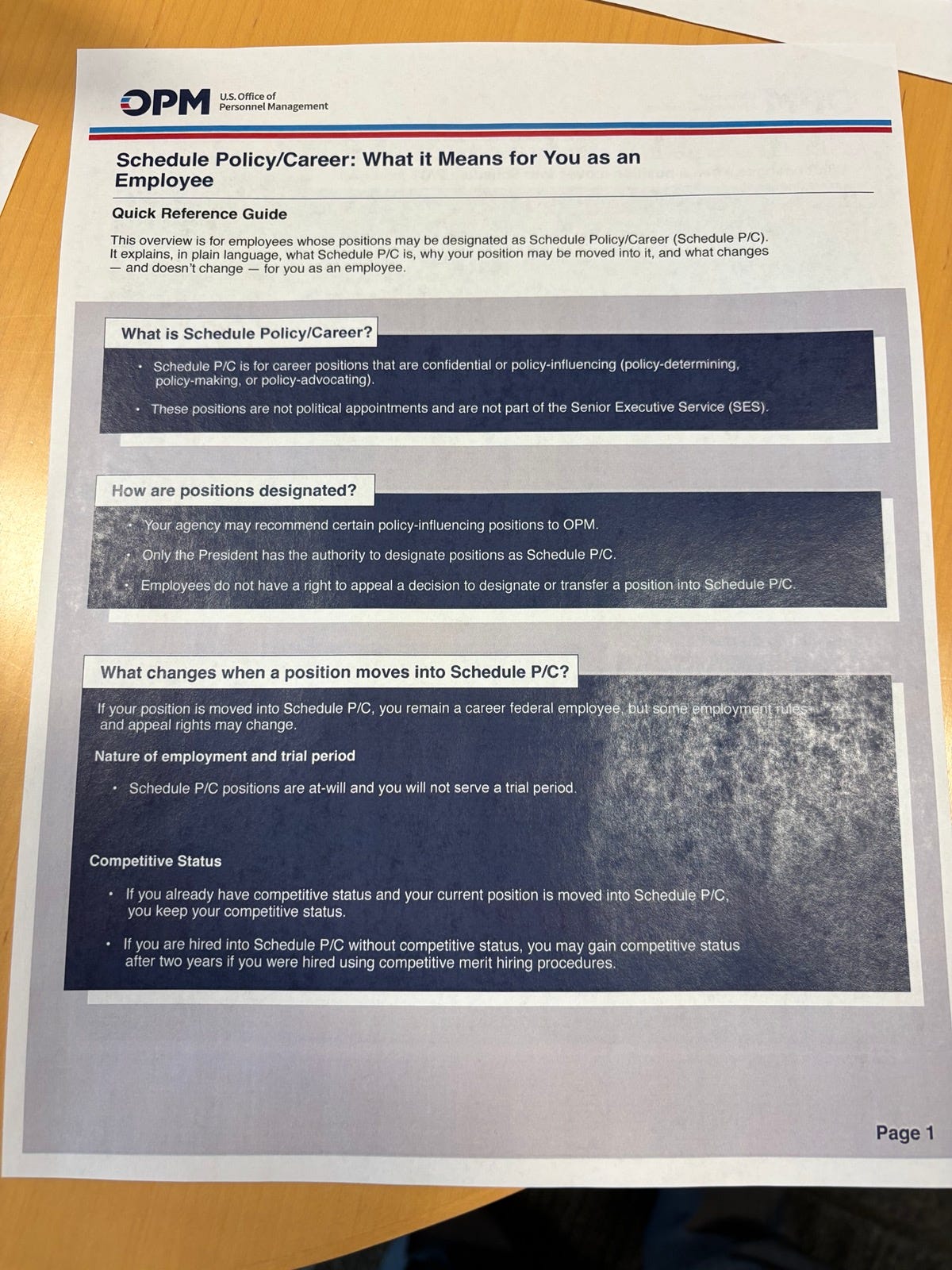
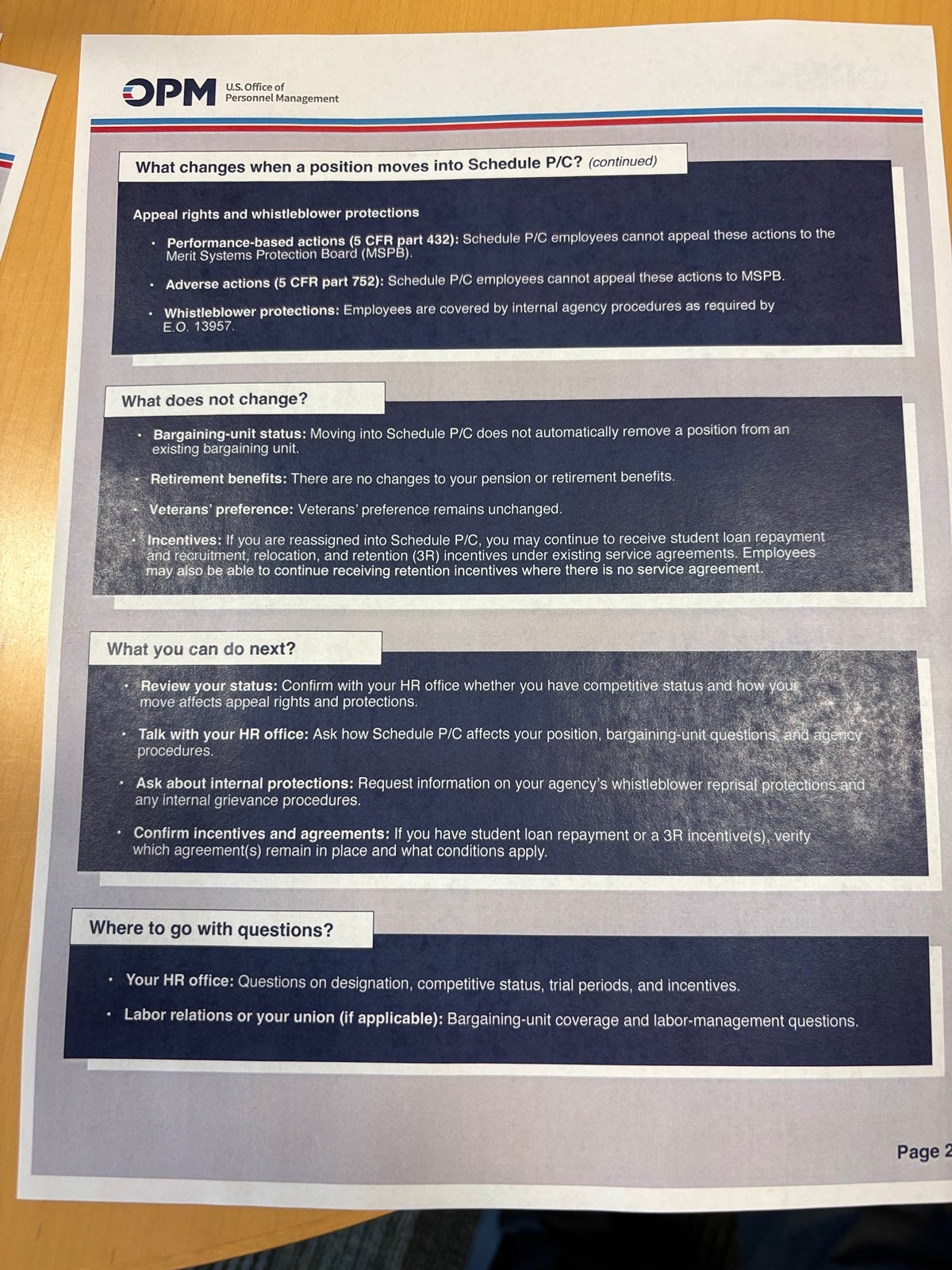
The Office of Personnel Management, which runs federal hiring, calls these “career, non-political jobs” in its guides. The change, it says, is “not intended to be punitive.” One handout even has a Myth vs. Fact box promising that employees can’t be fired “for any reason” and are still protected from retaliation.
The NIH email said the same thing. The change is about the type of job, it explained, not about anyone’s performance or conduct. Administrative, not punitive. And the line employees were meant to hold onto: at this time, the department is not planning to take any action against them because of it.
On a quick read, it sounds like a bureaucratic formality, but the form actually strips away job protections these employees had the day before.
How firing a federal worker used to work.
The rules made it slow on purpose. To let someone go for bad work or misconduct, an agency usually had to document the problem, give written warning, offer a chance to fix it, and, if the person pushed back, defend the decision to the Merit Systems Protection Board, a referee that sits outside the agency. The slowness was the safeguard. It’s what keeps a boss from firing people for political reasons and calling it something else.
The new category takes most of that away. These employees are now “at will,” the footing a lot of private-sector workers are on: they can be let go with little more than a written notice, and there is no outside board to appeal to.
The watchdogs are also getting moved in-house. A complaint that a firing broke the rules used to go to an independent office, the U.S. Office of Special Counsel. Now it goes to the agency’s own lawyers, who work for the same bosses doing the firing. Whistleblower complaints stay inside the agency, too.
This new category has a tangled backstory. It started in 2020 as “Schedule F,” was canceled, came back in 2025, and became a final rule in early 2026. On June 3rd, the president signed an order putting about 8,000 federal jobs into this category, most of them senior: program managers, the staff who hand out research grants, the lawyers, the people who write regulations.
The reassurance and the fine print do not match.
The guide says you are still protected from retaliation. The form says the people who now judge retaliation work inside the same agency that just reclassified you. Both are technically true. “You are still protected” really means protected by the same administration that did this, reviewed by its own lawyers, with no outside appeal.
The email’s wording is just as careful. “At this time” is true today and promises nothing about tomorrow. Saying the department won’t act “based on this conversion” rules out one reason for firing someone and leaves every other reason open. This is careful lawyering: every word is true today and commits the agency to nothing tomorrow.
This did not land at a calm agency.
In the weeks before the email, NIH’s infectious-disease institute lost its acting director, Dr. Jeffrey Taubenberger, days before a Senate hearing. Senator Patty Murray pressed NIH director Dr. Jay Bhattacharya about him and about seven other senior officials who had been pushed out or moved, including two who ran the institute’s grant money and were shipped off to a different institute. All of this during Ebola and hantavirus outbreaks. Dr. Bhattacharya described a plan to steer the institute away from biodefense and toward “conditions that people actually have.”
Why a parent, a traveler, or a farmworker should care.
It helps to picture what these people do all day. They decide which research the government funds, which means they decide what gets studied and funded, and, when an outbreak hits, how fast the country can respond. The work is slow and mostly invisible, which is part of why it is easy to treat as expendable. The staffer who keeps a tuberculosis vaccine trial alive through a decade of flat results does not make the news. Neither does the one whose funding decision, years later, becomes the twice-a-year HIV prevention shot that in NIH-supported trials kept every woman who got it from being infected. The payoff shows up long after the decision, usually for someone who never knew a government employee made it.
Meanwhile, infectious diseases aren’t on pause. The country had more than 2,100 measles cases in 2025, its worst year in three decades, and is now close to losing its “measles eliminated” status, which it has held since 2000. Whooping cough killed at least 13 people in 2025, several of them babies, as childhood vaccination rates slipped. Dengue, carried by mosquitoes moving north with the warming climate, now turns up in Florida, Texas, Arizona, and California. Bird flu has spread through nearly a thousand dairy herds and infected dozens of farmworkers. Ebola and hantavirus are spreading right now.
Then there is the work the administration has decided to scale back. The January plan called for moving NIAID away from biodefense and toward “conditions that people actually have.” AI and lab tools are making it cheaper and faster to intentionally build a dangerous germ. A 2025 study found that AI design tools could slip past the safety checks meant to flag dangerous genetic recipes before they get made. The threats most likely to need a fast, expert government response are the ones being pushed down the list by moving and reclassifying the very experts who could handle them.
What still stands between this and a purge.
The fear within NIH is that firings come next, targeting people seen as disloyal.
Being “at will” means you can be let go one at a time, without much process. A layoff, officially a “reduction in force,” has its own rules about who stays. This reclassification does not trigger a layoff. It takes away the place a fired employee could go to argue that the firing was really about politics. That’s the real change.
A few things still stand between this and the worst case. Someone would have to build a cover story for each firing. Clearing out a whole division at once would be obvious, the kind of thing that draws lawsuits and questions from Congress, which NIH is already getting. The reclassification is already being challenged in court: unions and watchdog groups say the president overstepped and that it violates due process. Higher courts are allowing this to proceed while the case continues, and no court has yet ruled on the core question. If the courts eventually trim it back, the changes could be undone.
Together, these documents describe an agency quietly putting in place the tools that would make punishment easier later. None of this predicts a purge. But it shows how few protections would now stand in the way of one.
The thing that would catch a politically motivated firing is the outside appeal, and that is exactly what the reclassification is taking away. Everything left, the reassurances and the promises, now rests on the good faith of whoever happens to be in charge.