


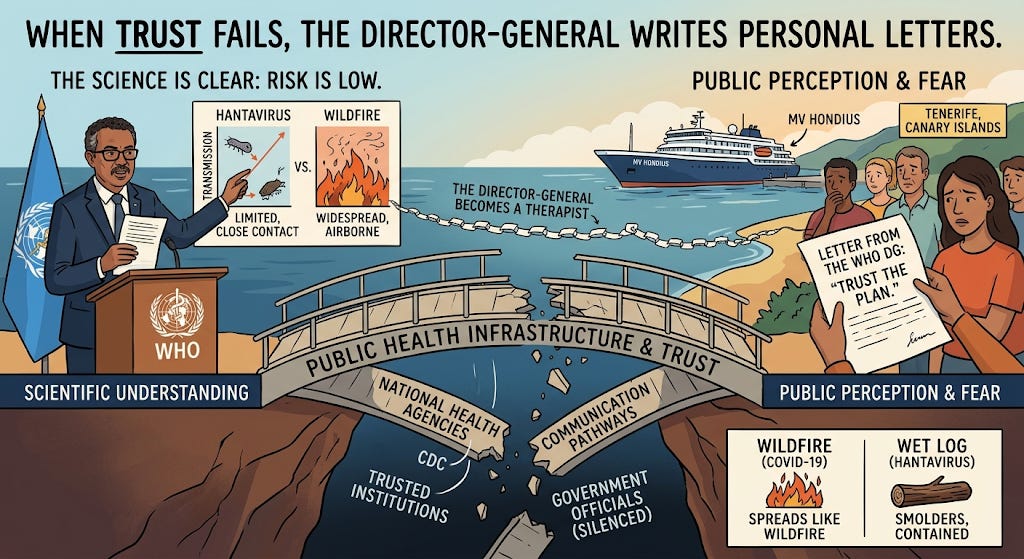
Andes virus spreads through close contact, not through the air.
The agency whose name contains the word “control” isn’t controlling anything.
The pathway from science to public understanding has been severed.
A letter to 900,000 people about one cruise ship.
Today, the Director-General of the World Health Organization did something unusual. Tedros Adhanom Ghebreyesus wrote a personal letter to the people of Tenerife.
He didn’t issue a press release or file a technical brief for health ministers. He wrote directly to the residents of a single island in the Canary Islands, because a cruise ship was heading toward their port, and they were afraid.
The ship is the MV Hondius. It left Antarctica in March carrying 146 passengers and crew from 23 countries. Three people have died of hantavirus. Five more cases have been confirmed. The ship is set to dock at Granadilla, Tenerife, on May 11. Passengers will be moved in sealed vehicles through a cordoned corridor and sent home.
Tedros assured the people of Tenerife that their risk is low. He said he would travel to the island himself to watch the operation. He thanked Spain for its solidarity. He asked residents to trust the plan.
The letter is thoughtful. It is also one of the most telling documents of the entire outbreak. What it reveals has little to do with hantavirus and everything to do with what comes after a pandemic breaks public trust.
Here’s what we know about hantavirus so far.
Andes virus spreads through close contact, not through the air.
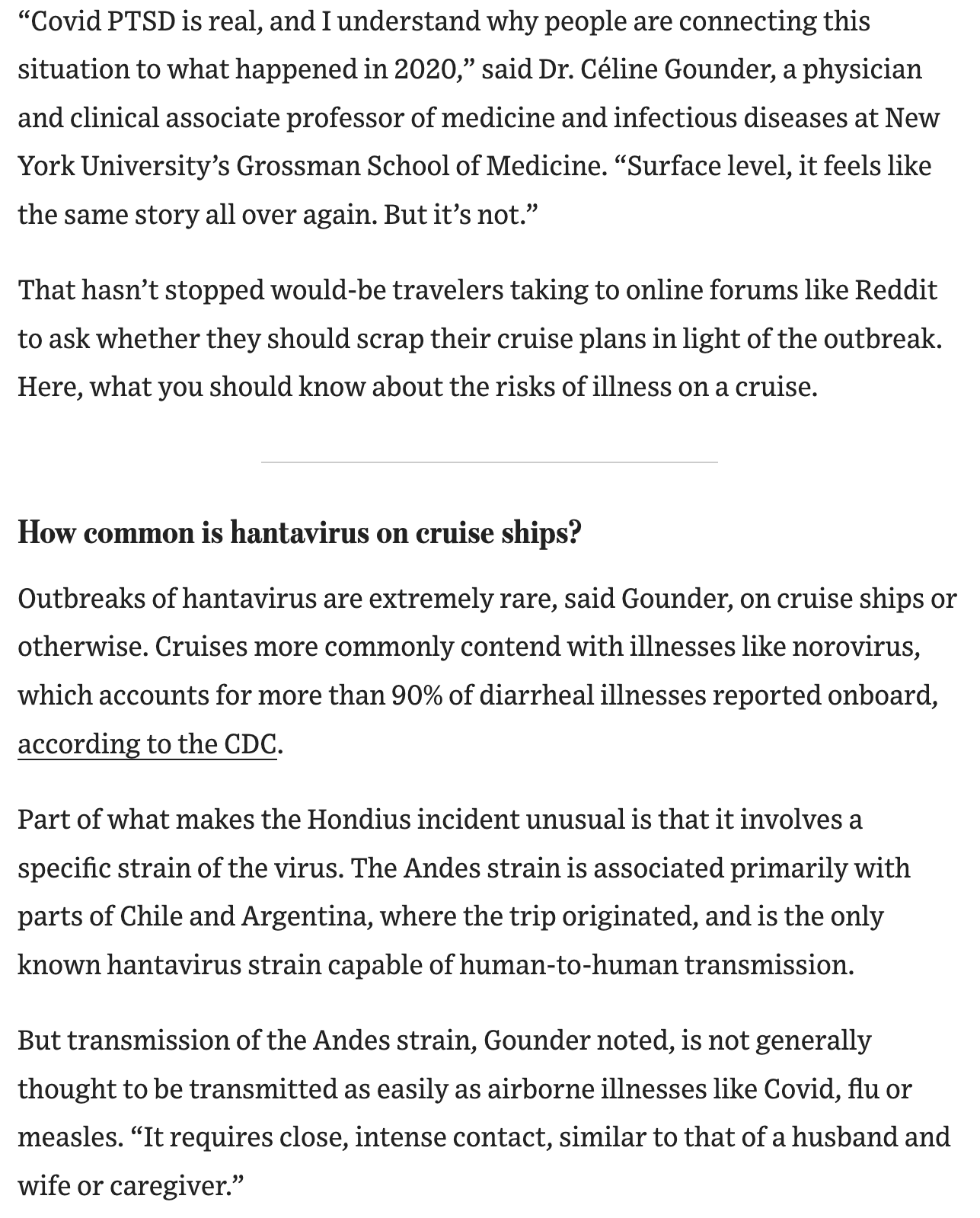
The virus on the MV Hondius is the Andes strain. It spreads through close contact, for example, sharing a bed, caring for a sick person, or handling bodily fluids. Based on decades of research on hantaviruses, it does not spread through the air. You cannot catch it by sitting in the same room, walking through the same port, or breathing the same breeze on a dock in Tenerife.
WHO has said so directly. So has every virologist who has looked at the data. The case count has been stable for more than 48 hours. No one on the ship is showing symptoms. The flight attendant who spent hours in a sealed cabin with a confirmed case tested negative.
Everything we understand about this virus’s transmission — built over decades of studying hantaviruses — points away from pandemic potential. But many are asking, understandably, how we can be confident about that.
COVID was the wildfire. Hantavirus is the wet log.
A fire chief looking at two fires can tell you how each one will behave. A dry forest in drought season with 40-mile-per-hour winds is going to become a wildfire. A wet log in a stone fireplace is going to smolder and die. The chief isn’t guessing. The chief understands the fuel, the conditions, and how fire moves.
COVID was the wildfire. It spread through the air. People who felt fine passed it to strangers in grocery stores. The entire world population was fuel.
Hantavirus is the wet log. It requires direct, sustained contact with an infected person’s body fluids. People who feel fine don’t spread it. The virus infects deep lung tissue, which means it doesn’t get coughed or breathed out in large enough amounts to cross a room. The fuel is limited.
When the mechanism is this different, the expected outcome changes. That’s what research and experience tell us, and so far, it’s what we’re seeing in this outbreak.
The agency whose name contains the word “control” isn’t controlling anything.
So why did the head of a 194-country health agency need to write a personal letter to one island?
The institutions that should be translating this science into public confidence have been silenced, sidelined, or torn apart.
Acting CDC Director Jay Bhattacharya posted his first public statement on the hantavirus outbreak on May 8th, weeks after the first death. He said the risk to Americans is low. He said “clear, written health guidance” had been sent to American passengers “through the State Department.” And he described the CDC’s role as “lending its technical expertise.”
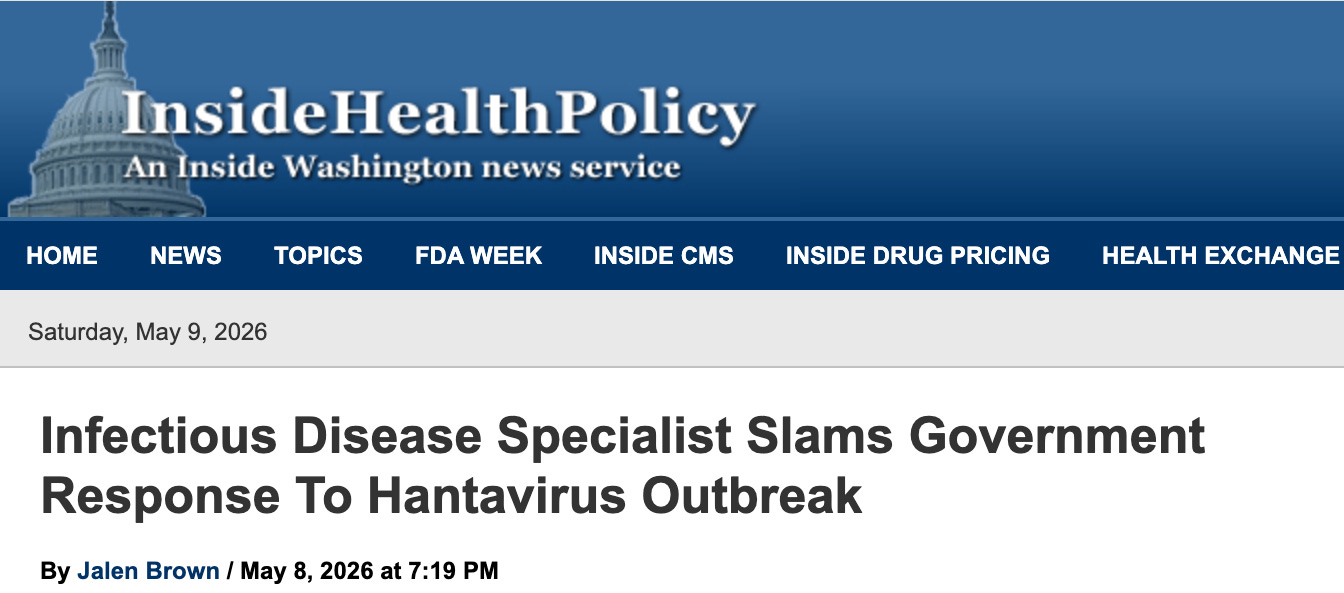
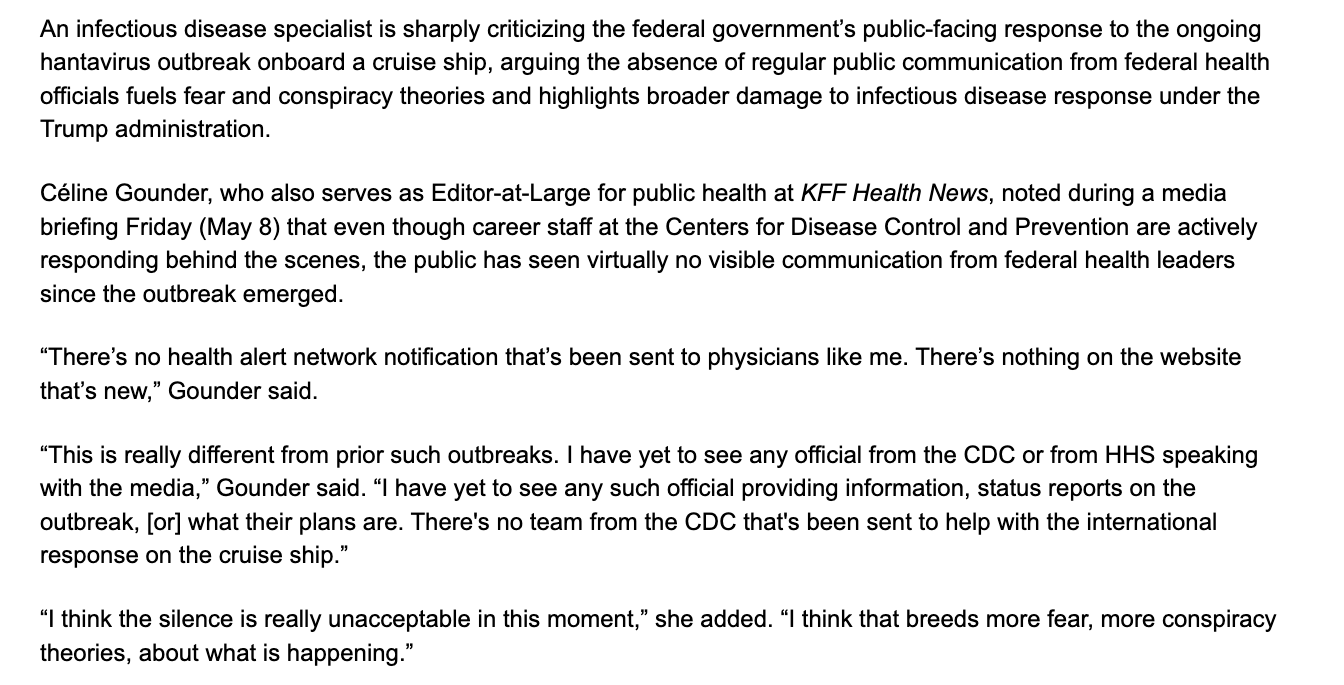
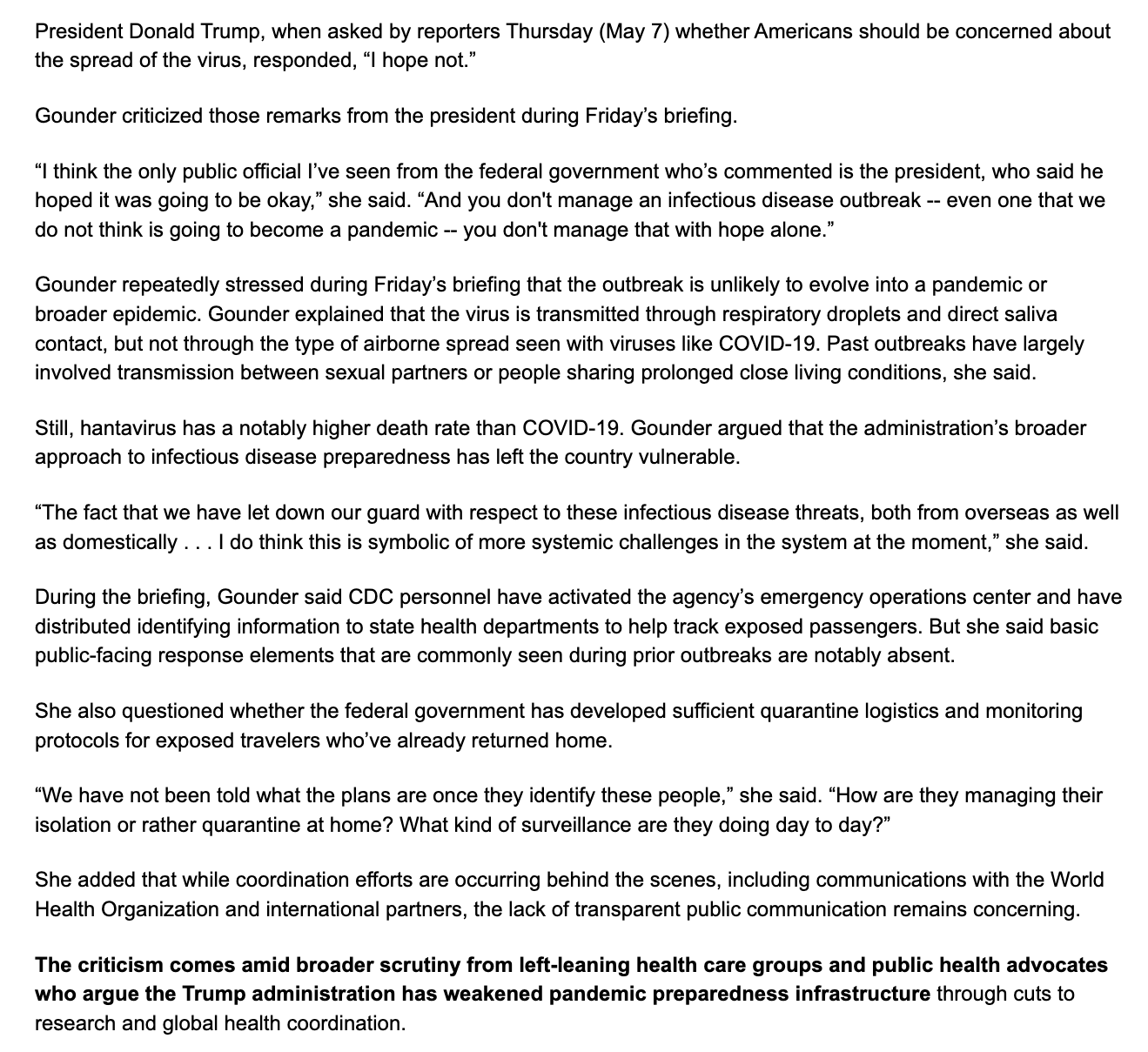
The first Health Alert Network notice didn’t go out to U.S. clinicians until Friday afternoon. No public guidance has appeared on the CDC website, and no CDC official has spoken to the media on the record. Seven Americans are being monitored across five states, and no public protocol exists for their follow-up.
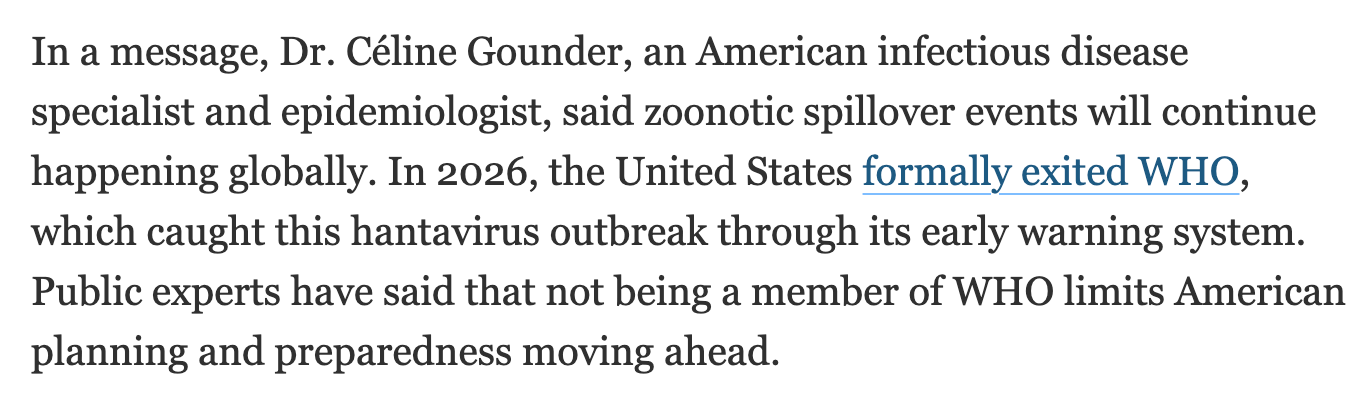
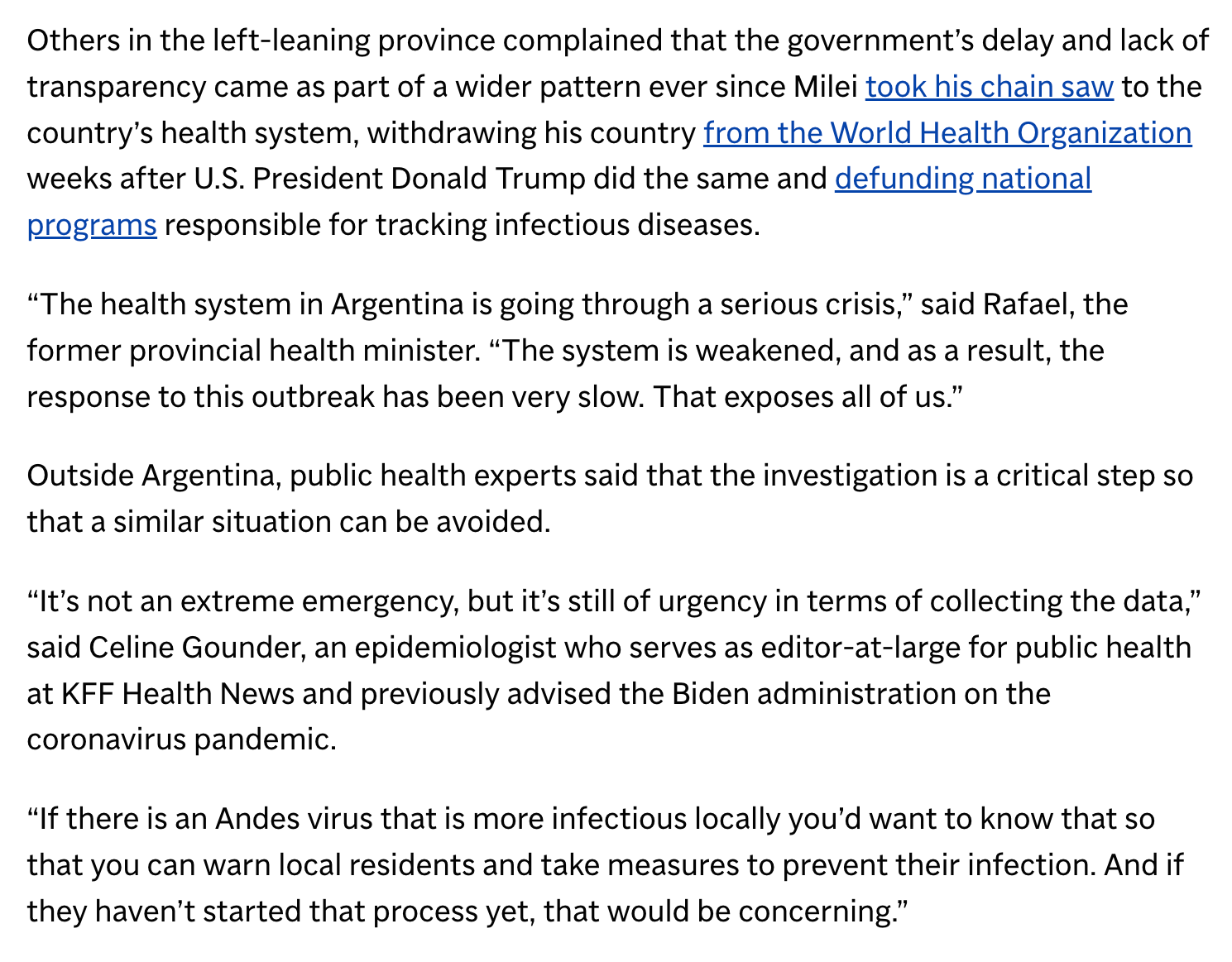
The chief of the CDC’s Vessel Sanitation Program — the unit that handles disease on cruise ships — just retired and hasn’t been replaced. The agency’s budget has been cut. The U.S. pulled out of the WHO. The CDC’s international disease research network, CREID, was defunded.
The pathway from science to public understanding has been severed.
This is what it looks like when you hollow out public health infrastructure, and then an outbreak shows up. The science still functions. Scientists are still watching, testing, and refining what they know. The pathway from that evolving knowledge to public understanding has been cut. So the Director-General of the World Health Organization — responsible for the health of 8 billion people — spends his Friday writing to 900,000 residents of Tenerife to explain that a cruise ship is safe to dock.
Virologists aren't guessing, but biology can surprise.
An electrical engineer can look at a wire and tell you it will carry 15 amps safely and fail at 50. I couldn’t tell you that. I’m not an electrician. But it’s not a guess. The engineer understands, in a way that I don’t, the properties of copper, how heat moves through metal, and how resistance works. The material determines the outcome.
Virologists understand something similar about viruses, with a caveat. Biology is messier than copper wire. Viruses can surprise us, and our understanding updates as new data comes in. Sequencing results from the MV Hondius strain are still pending. If they reveal unexpected mutations, the assessment could shift. But the fundamental principles of transmission — how a pathogen moves between people — are well established. A virus that spreads through the air and passes between people who feel healthy has pandemic potential. A virus that requires close contact with body fluids and only becomes contagious when a person is severely ill has far less capacity to spread. Those principles guide every public health assessment, and right now, every data point from this outbreak is consistent with them.
COVID taught distrust. No one taught what comes next.
COVID taught the public that experts can be wrong, that governments can be slow, and that a new virus can shut down the world. All of that was true. What no one took responsibility for teaching afterward was the other half: how to tell the difference between a virus that can do that and one that cannot. SARS-CoV-2, the virus that caused COVID, was a new virus. We were learning as we went. The hantavirus family, which includes the Andes virus, is not new. We don’t know everything there is to know about it, and what we tell the public could change as we learn more. That’s how science works. It’s a process, the scientific process. It’s not set in stone. Honest risk communication means saying: here is what we know now, here is what we’re still figuring out, and here is how guidance might evolve.
That kind of communication requires institutions willing to show up and talk — in real time, in public, with the humility to say what they don’t yet know alongside what they do. It is the opposite of silence followed by a single tweet.
But every outbreak now lands in the same void, the same fear, the same memory of 2020. Without trusted institutions explaining risk, every cruise ship becomes a plague ship, every port a frontline, and the Director-General of the WHO becomes a therapist.
A functioning public health system is the difference.
Tedros’s letter to Tenerife is generous and kind. It is also evidence of a system failure. The head of a global health agency should not need to fly to an island to personally tell its residents that a ship is safe to dock. That job belongs to national health agencies, public health officers, and government officials with the standing and trust to say: we have looked at this, here is what we know, here is what we’re still learning, here is what you can expect.
There is no vaccine for hantavirus. There never has been. We could have developed one, but the case counts have historically been too small to attract the investment, and the political urgency too low to justify the public funding. Hantavirus is a neglected disease, the kind that doesn’t generate enough market return to develop a product, until it shows up on a cruise ship carrying passengers from 23 countries. Then, for a few weeks, everyone pays attention. Then they stop.
The MV Hondius will dock in Tenerife on Sunday. The passengers will be moved off the ship. Monitoring will continue for 42 days. The outbreak, by every available measure, is winding down.
What is not winding down is the condition that required Tedros’s letter. The gap between scientific understanding and what the public can absorb keeps growing, and the institutions designed to bridge it are being taken apart by the same governments asking their citizens to stay calm.
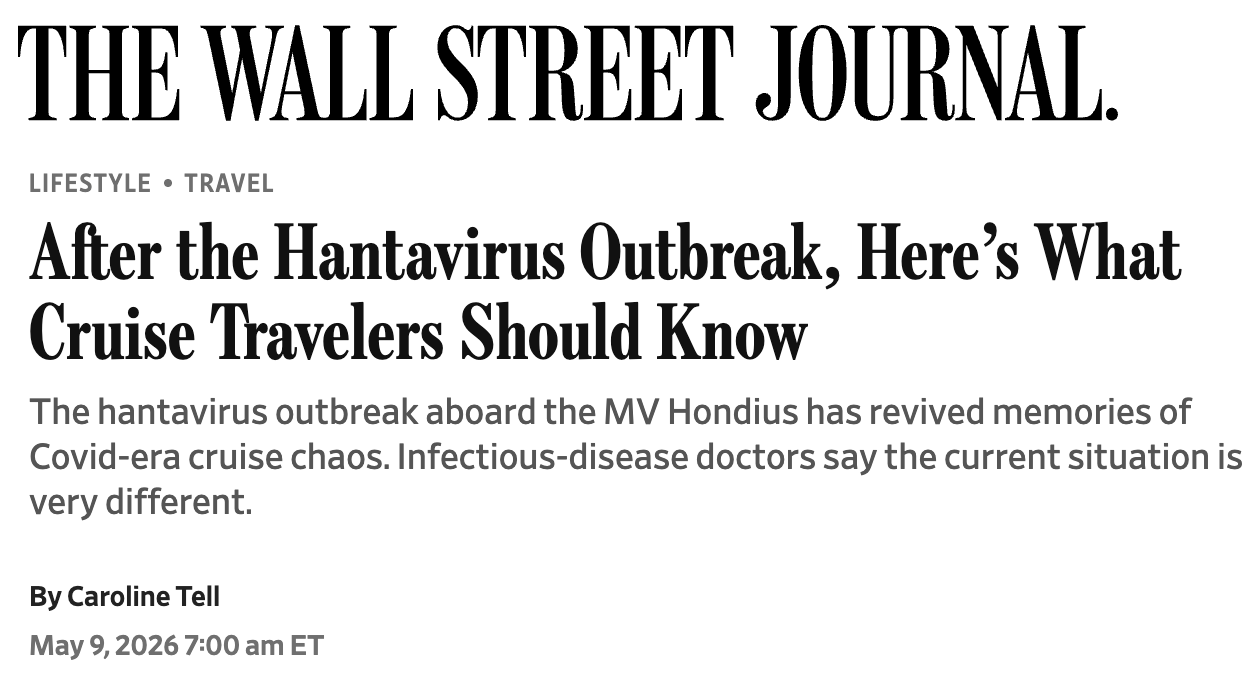
And in the news…
May 9th
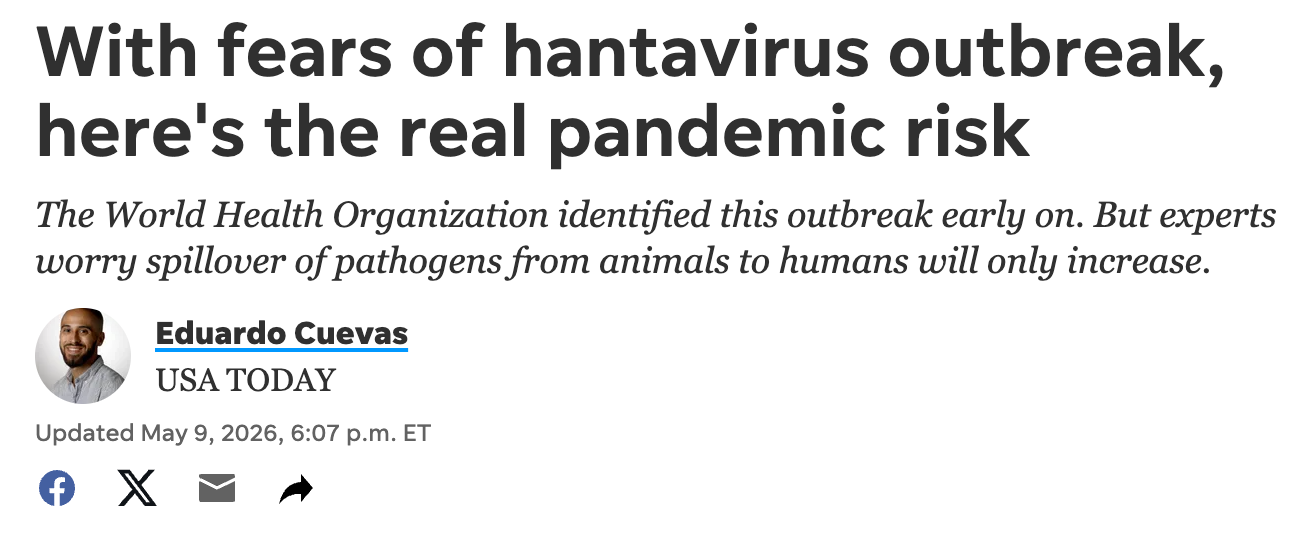
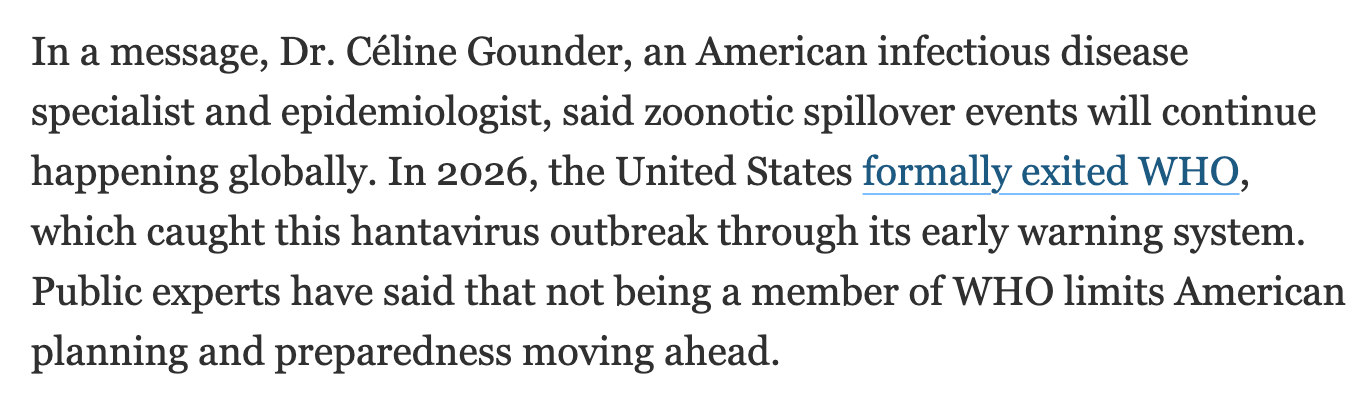
May 8th
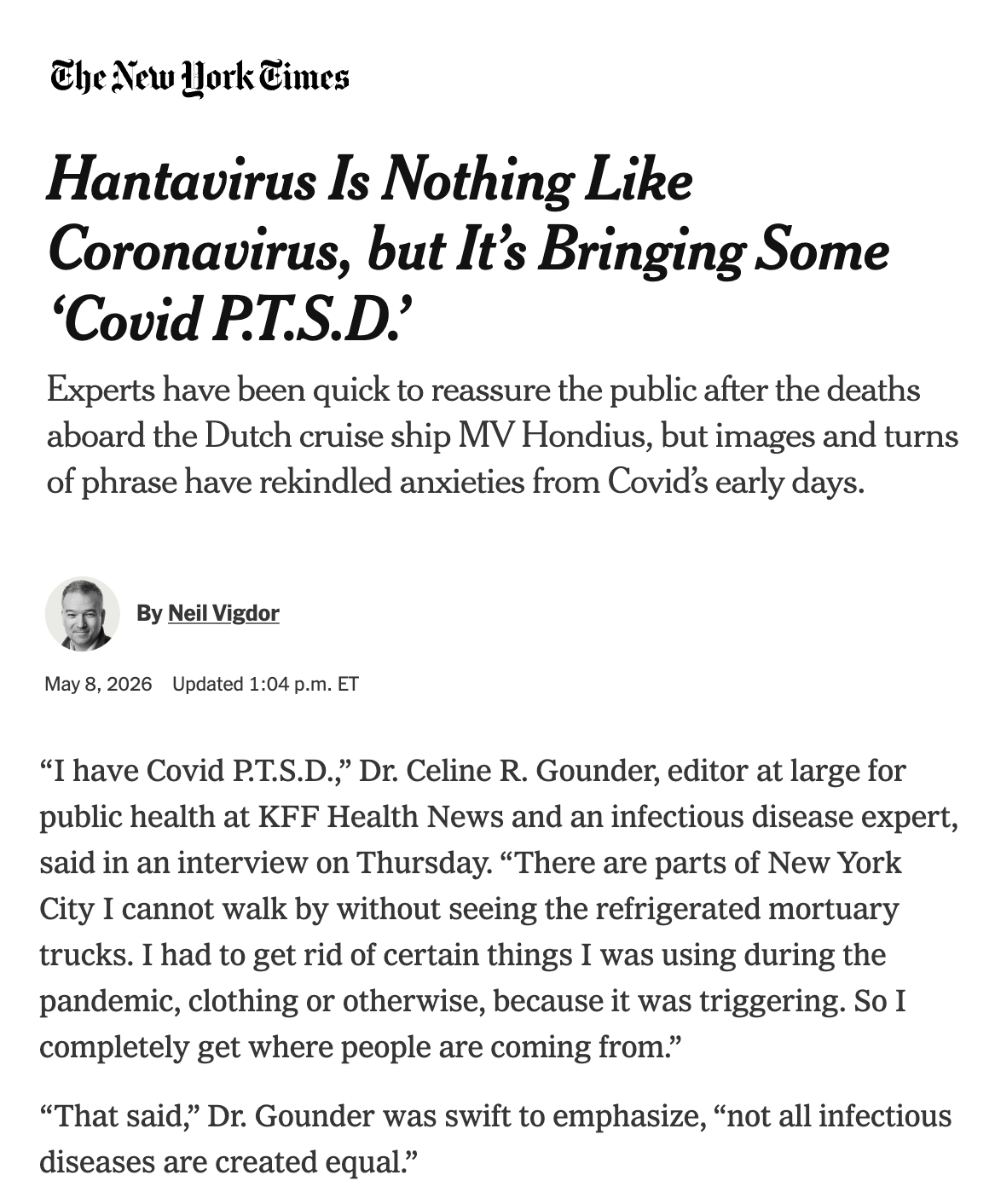
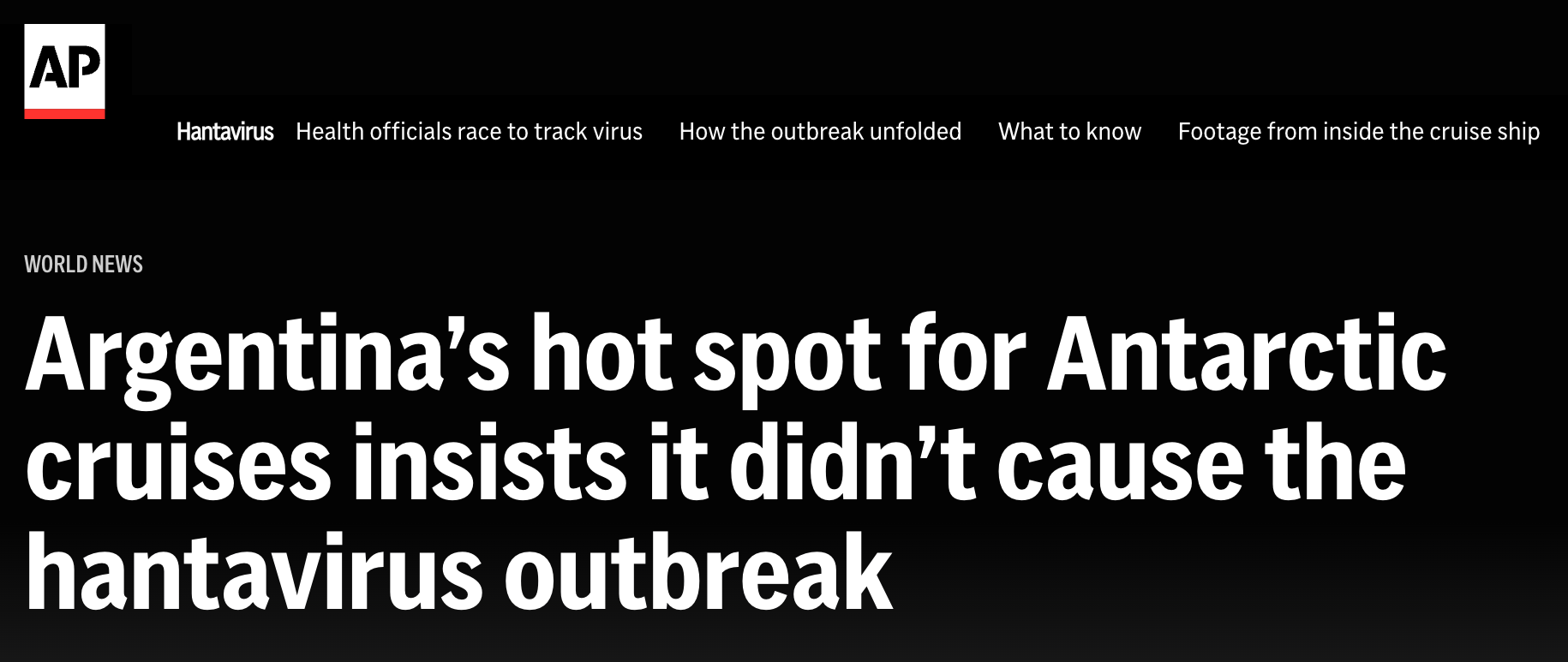
May 7th