


Big Claims, Big Stakes for Public Health
More than half a century ago, only about 13% of U.S. adults were classified as obese. Today, that figure is over 40%, a rise that many public health experts attribute to changes in diet, food processing, and the modern food environment.
That backdrop loomed large as the Trump administration unveiled the 2025-2030 Dietary Guidelines for Americans.
Senior officials framed the update as a sharp pivot from past federal nutrition policy, arguing that earlier dietary advice helped fuel chronic disease and rising health care costs.
“For decades, federal dollars have promoted low-quality, highly processed foods that lead to scores of long-term health issues,” said White House press secretary Karoline Leavitt. “This failed approach in our public health system ends today.”
Why the guidelines matter
Updated every five years by the USDA and HHS, the Dietary Guidelines for Americans influence far more than personal food choices. They shape what is served in public schools, military bases, and VA hospitals, and guide federal nutrition programs like the Supplemental Nutrition Assistance Program (SNAP), Special Supplemental Nutrition Program for Women, Infants, and Children (WIC), and Head Start.
As HHS Secretary Robert F. Kennedy Jr. said at the briefing, “Dietary guidelines shape dozens of federal feeding programs, including Head Start… meals for 1.3 million active duty service members and food served to 9 million veterans in VA hospitals.”
Because of that reach, even small changes can affect millions of meals and billions of dollars in food purchases.
What the science found
The guidelines are based on the Scientific Report of the 2025 Dietary Guidelines Advisory Committee (DGAC), released in December 2024.
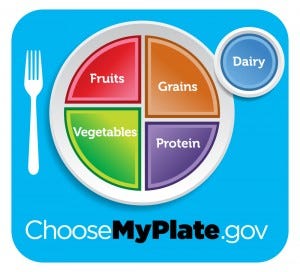
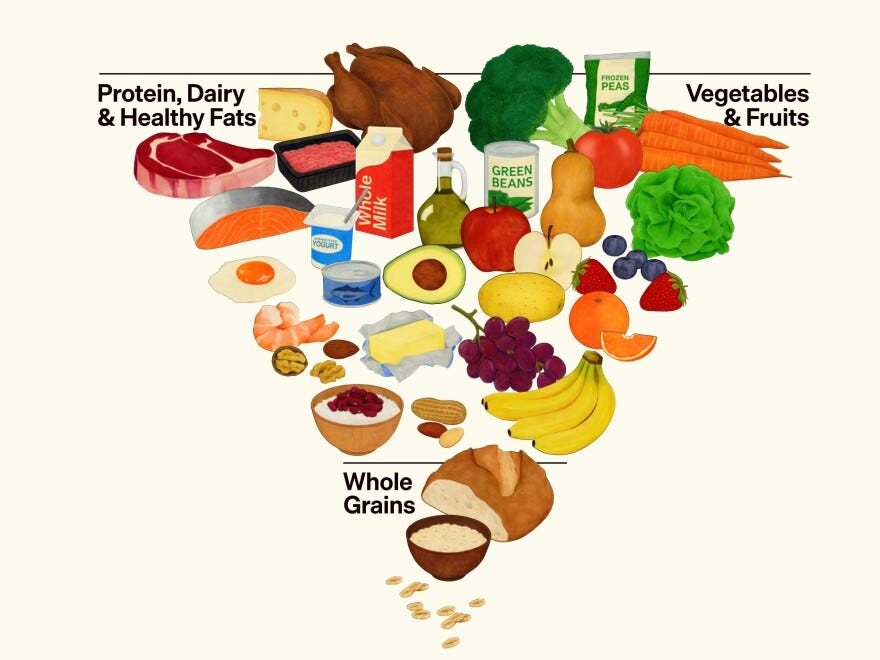
The DGAC concluded that overall eating patterns matter more for health than individual nutrients. Diets higher in vegetables, fruits, whole grains, and less-processed protein were linked to lower risk of heart disease and type 2 diabetes.
The American Heart Association (AHA) said that it “welcomes the new dietary guidelines and commends… the emphasis on increasing intake of vegetables, fruits and whole grains while limiting consumption of added sugars, refined grains, highly processed foods, saturated fats and sugary drinks.”
The American Academy of Pediatrics (APA) president Dr. Andrew Racine said the new guidelines are “an opportunity to clearly explain to parents what a healthy diet for their children should look like; rich in whole, nutrient-dense foods, and low in added sugars and refined carbohydrates.”
At the same time, the DGAC emphasized that much of the evidence comes from studies that identify links between diet and health but cannot prove cause and effect.
Protein and grains
One notable change in the new guidelines is a stronger emphasis on protein and reduced emphasis on grains, particularly refined grains.
School meal standards are being updated to require protein foods at every meal, separate from grain requirements.
Kennedy described this as fixing past mistakes: “Protein and healthy fats are essential and were wrongly discouraged in prior dietary guidelines. We are ending the war on saturated fats.”
Some researchers who study insulin resistance agree that refined carbohydrates have played a major role in obesity and diabetes. Others urge caution, noting limits in the evidence.
The AHA called for restraint, saying: “Protein is an essential component of a healthy diet, and we urge more scientific research on both the appropriate amount of protein consumption and the best protein sources for optimal health.”
Until that research is clearer, the group added: “We encourage consumers to prioritize plant-based proteins, seafood and lean meats and to limit high-fat animal products including red meat, butter, lard and tallow, which are linked to increased cardiovascular risk.”
Salt, saturated fat, and dairy
The new guidelines allow greater flexibility around whole-fat dairy and some cooking fats.
The AHA warned that this could carry risks: “We are concerned that recommendations regarding salt seasoning and red meat consumption could inadvertently lead consumers to exceed recommended limits for sodium and saturated fats, which are primary drivers of cardiovascular disease.”
On dairy, the organization noted continued disagreement: “While the guidelines highlight whole-fat dairy, the Heart Association encourages consumption of low-fat and fat-free dairy products, which can be beneficial to heart health.”
These disagreements highlight how experts can share broad goals while differing on specific foods.
Ultra-processed foods
The new guidelines warn against highly processed foods and sugary drinks. However, the federal government still lacks a formal definition of “ultra-processed,” limiting how the guidance can be applied in regulation and policy.
Kennedy referred to these products as “food-like substances” that “damage health and should be avoided.”
There is broad agreement that heavy consumption of ultra-processed foods is harmful. But defining them remains difficult. Common dietary assessment tools often cannot reliably distinguish levels of processing — for example, between a homemade meal and a commercially prepared frozen dinner — making consistent classification challenging for researchers and policymakers.
What menu calorie labels taught policymakers
Past nutrition policies offer clues about what the new guidelines can and cannot achieve on their own. One example is the federal rule requiring large restaurant chains to post calorie counts on menus, which took effect nationwide in 2018.
The goal was to help consumers make healthier choices. Research since then has shown mixed results. Some studies found small, short-term reductions in calories ordered, while others found little or no lasting change. Over time, many customers stopped noticing the numbers or ignored them altogether.
Where calorie labeling appeared to have a greater impact was behind the scenes. Faced with public calorie counts, some restaurant chains reformulated menu items, reduced portion sizes, or added lower-calorie options. The strongest effects came not from individual choices, but from changes in what was offered.
The experience suggests that information helps, but lasting change often requires shifts in the food environment itself, including purchasing practices, product formulation, and institutional menus.
Access to healthy food and the role of farm policy
Another key question is whether people can realistically follow the guidance.
The DGAC report stated: “An extensive body of evidence indicates that these differences are driven by broader social, economic, and structural conditions that are beyond the individual’s control.”
Dr. Racine echoed that concern, noting that pediatricians “see the consequences of the current food environment, where access to nutritious food is often unavailable or unaffordable and highly processed foods fill the void.”
USDA officials pointed to planned changes in SNAP standards and recent food pricing trends. Still, federal data show that access to healthy food varies widely by income and location, and farm policy plays a role.
Most federal farm subsidies support commodity crops such as corn, soybeans, wheat, and rice, along with dairy and livestock production. These programs reduce financial risk for producers through price supports, insurance, and guaranteed markets. Fruits and vegetables receive far less direct support, even though they are central to recommended healthy diets.
This mismatch can make foods encouraged by the Dietary Guidelines more expensive or less available than foods backed by long-standing federal policy.
Nutrition experts have long argued that better aligning farm policy with nutrition guidance by investing more in produce and regional supply chains would make healthy eating easier to achieve, not just easier to recommend.
What the guidelines do and don’t settle
The 2025-2030 Dietary Guidelines for Americans strengthen warnings about ultra-processed foods, place more emphasis on protein, and move away from strict low-fat messaging.
The American Medical Association applauded the release of the guidelines, citing their potential to improve nutrition counseling and public health outcomes, while emphasizing the importance of continued investment in nutrition education and implementation across the healthcare system.
At the same time, the new guidelines rely largely on studies that track diets and health over time, research that can reveal patterns but cannot prove cause and effect. Key scientific debates remain unresolved, and the guidelines do not directly address gaps in food access or farm policy.