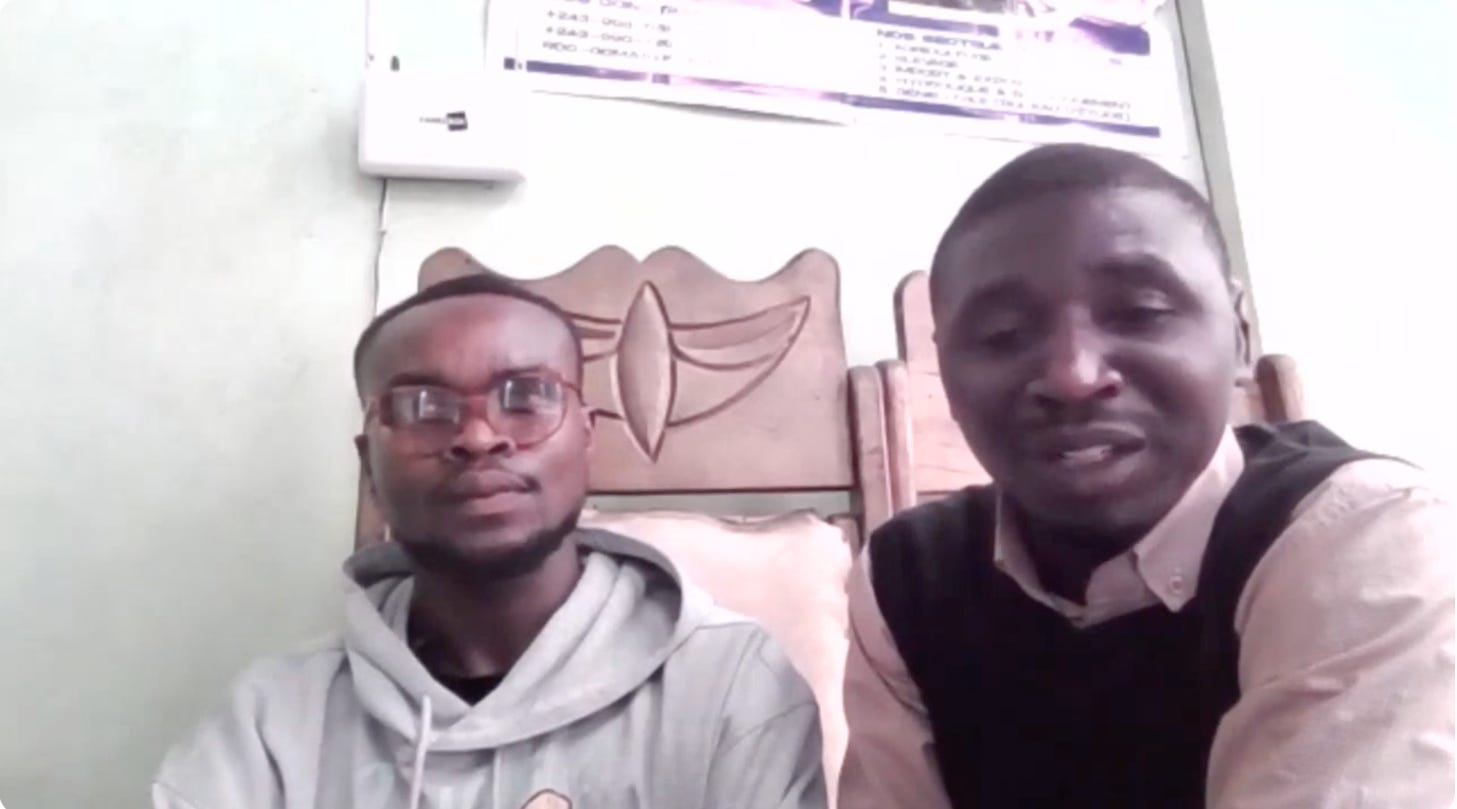
Two doctors in Goma, both out of work.
Dr. Joaquim was a physician at Keshero Hospital in Goma until USAID funding was cut. He was one of the doctors let go. Now he’s unemployed, as is Dr. Raymond, his colleague. Both spoke to me from North Kivu while a Bundibugyo Ebola outbreak, declared a global health emergency on May 17th, spreads toward Goma from neighboring Ituri Province.
A collapsing health system.
USAID was the largest bilateral health donor to the DRC, providing over $838 million in 2024. Over 70% of humanitarian action in the country was U.S.-funded. When that money stopped, Dr. Joaquim traveled to a rural health zone to see what remained. He found empty supply shelves and a chief medical officer who had become a farmer.
“I changed profession,” the chief medical officer told him. “I became a farmer while still being the chief medical officer, because 70% of the supplies I received came from USAID.”
Doctors spent years in training are now growing cassava and fishing. Patients who can’t afford care bring sweet potatoes to the hospital to cover treatment costs. Nurses left alone at their posts carry every responsibility themselves. One doctor now covers 10,000 people.
Free maternity care, funded largely by USAID, ended. Women stopped receiving prenatal kits, deworming, and mosquito nets. Malaria treatment that had been free in rural areas disappeared. Malnutrition, premature births, and maternal deaths followed. “People were dying, frankly,” Dr. Joaquim said.
With hospitals stripped, patients turned to traditional healers. Dr. Joaquim described patients treated at home with herbs, preventable amputations, and complications of peritonitis.
Responding with what little they have.
This is the health system into which Ebola has arrived. The outbreak has reached 134 confirmed cases across the DRC and Uganda, with 18 confirmed deaths. There is no approved vaccine for the Bundibugyo variant. Across North Kivu Province, Dr. Raymond said only two partners have signed on to support the Ebola response in M23-controlled territory. Doctors and nurses are among the dead.
When I asked what worries them most about their capacity to respond, Dr. Joaquim’s answer was brief: personal protective equipment, infection control, and awareness campaigns.
Dr. Raymond put it more plainly: “We will not give up. We’ve always said you must respond with what you have.”
What they have is almost nothing.