


The agency you've never heard of
Firefighters take on risks the rest of us never will. This spring, the small group of federal scientists who track how those risks affect their bodies came close to losing their jobs.
What NIOSH does
CDC runs the National Institute for Occupational Safety and Health (NIOSH), which studies how people get hurt at work. It tracks cancer in firefighters. It investigates firefighter deaths on the job. It studies lung disease in coal miners. It helps administer care for 9/11 responders and reconstructs radiation doses for workers who got sick after nuclear-weapons work.
This spring, the administration moved to cut it hard, at one point, by more than 90% of the staff. Internal CDC emails released by Senator Bernie Sanders this week lay out what that looked like, program by program.
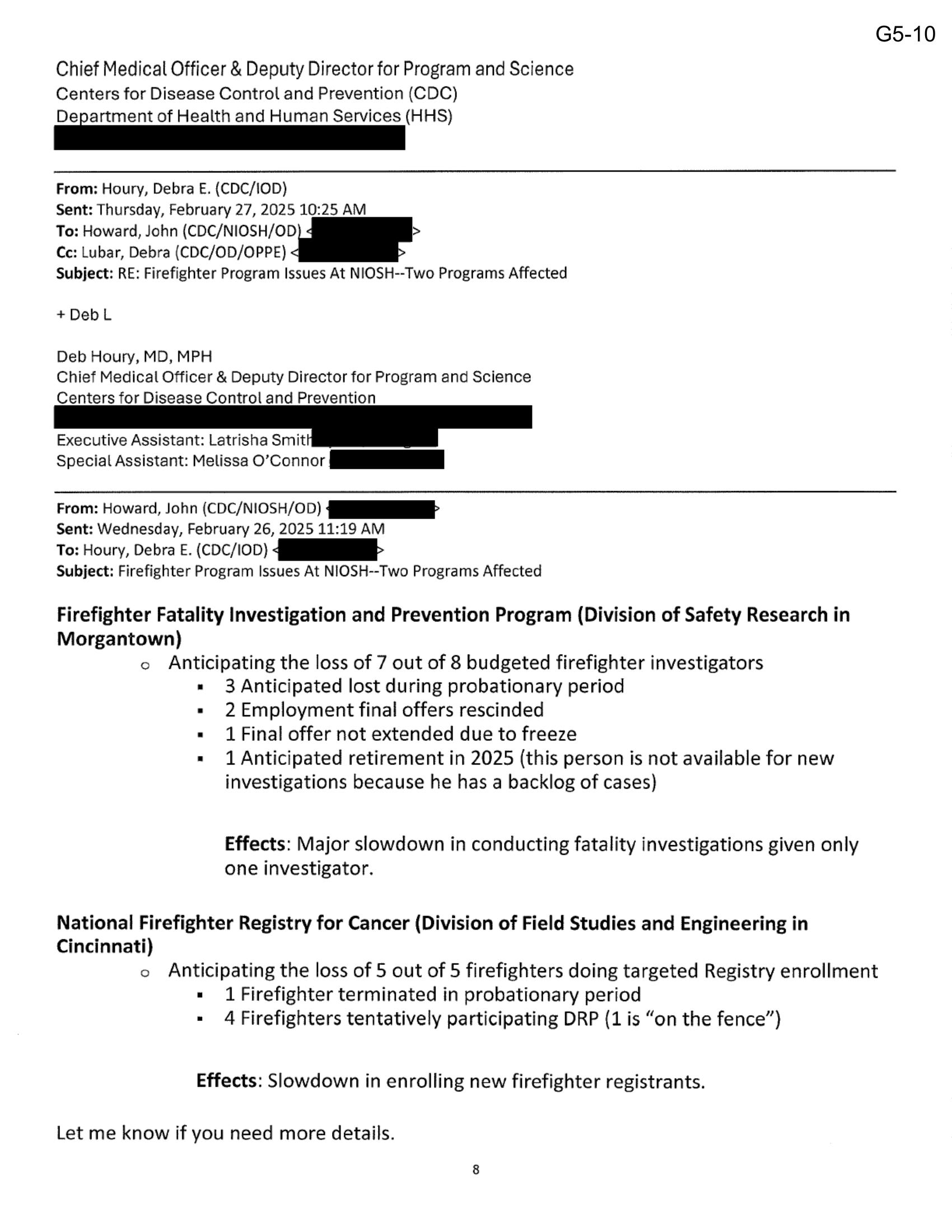
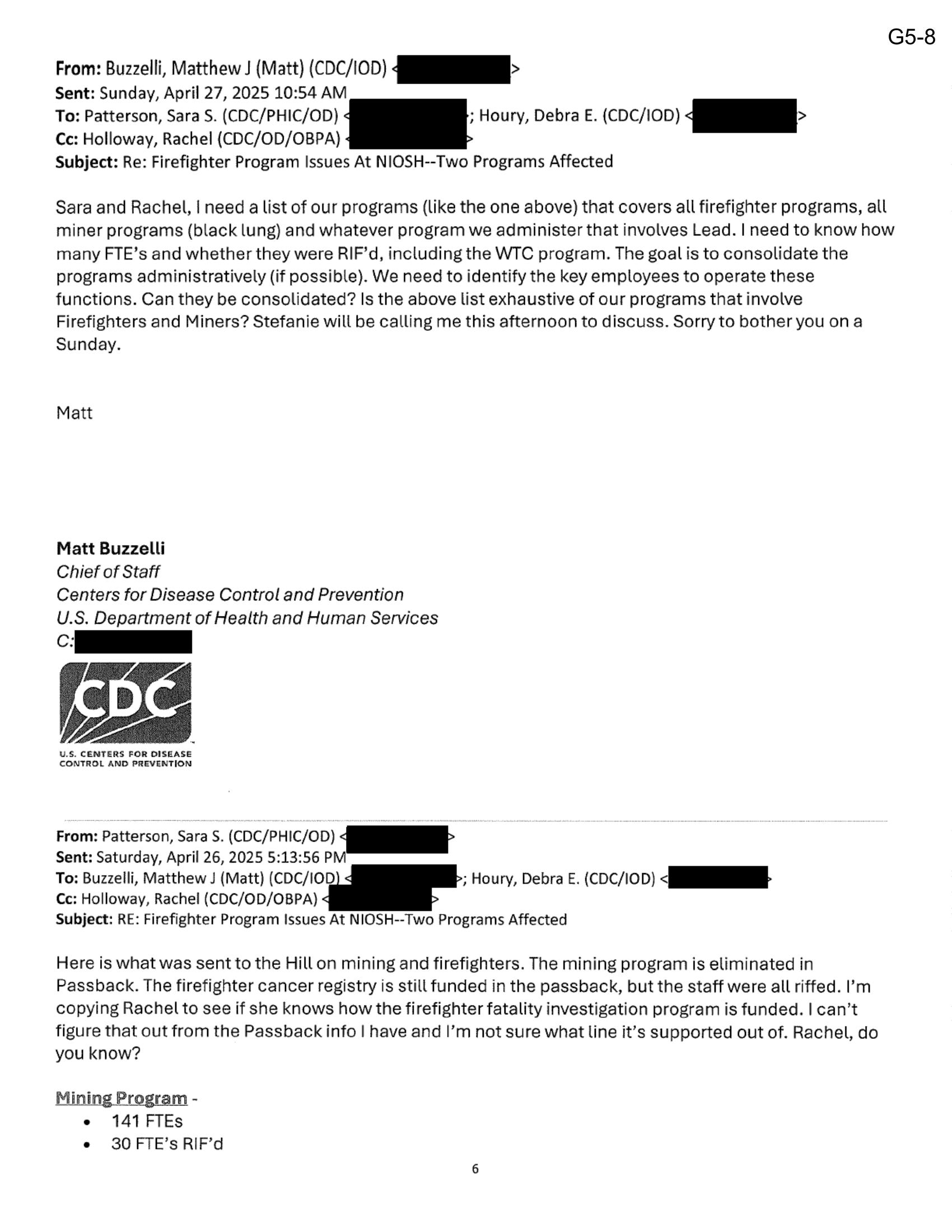
The National Firefighter Registry for Cancer had enrolled tens of thousands of firefighters. Firefighters get certain cancers at higher rates, and Congress created the registry to measure it. By late April 2025, 10 of its 33 staff were already cut, with 19 more notified they were next. The team that investigates firefighter deaths was down to a single investigator. The mining safety group, 141 people in Spokane and Pittsburgh, was “eliminated.” Another email lists the program for nuclear weapons workers: 18 people cut, “including the Director.”
After all that, Kennedy’s chief of staff emailed on a Sunday to ask which of these programs could be “consolidated.”
Each time leadership asked for a "continuing operating plan," Dr. Houry said that she had to keep telling them that once you lay the staff off, there's no operation to continue.
How it got reversed
A coal miner sued. Senator Shelley Moore Capito, a Republican from West Virginia, pressed Kennedy directly about the miners. Firefighter and labor unions kept the pressure on. By mid-May, the administration brought some workers back and reinstated NIOSH’s director. In January 2026, HHS rescinded all NIOSH layoff notices. The firefighter cancer registry is enrolling again, and the CDC describes it as the largest effort ever undertaken to understand and reduce cancer risk among U.S. firefighters.
The cuts were reversed before they became permanent, but they weren’t theoretical: the firefighter registry went offline, black-lung surveillance was interrupted, and 9/11 health certifications were thrown into limbo. Reversing the layoffs took a lawsuit, a senator from coal country, and months of union pressure.
Why a registry matters
These programs exist because Congress promised them to people who take on danger for the rest of us. A cancer registry only works if someone is enrolling firefighters and following them over years. Death investigations only prevent the next death if someone is actually doing them. The workers most exposed to the risk are the first to lose when the tracking stops.
Who can restore it?
Congress controls the money and writes the mandates. The appropriators and oversight committees that fund these programs can make the funding permanent and ask, on the record, how a legally required program for 9/11 responders lost its director in the first place. Firefighter and mine-worker unions can pressure. And voters in fire and mining districts elect the members who campaign on protecting these jobs.
Update, July 6th: This piece has been updated to include Dr. Debra Houry's account of the internal push to keep the programs running on paper after the staff had been cut.